Why Many Millionaires Don’t Feel Rich

By Stephanie Christensen

The term “millionaire” once inferred that a person was part of society’s upper crust, able to enjoy luxuries most only dreamed of, including vacation properties and  early retirement. The Gilded Age of the 1980s was all about flaunting excess, as echoed in the movie “Wall Street” and television series like “Dallas” and “Dynasty.” Back then one was perceived to be “rich” if he or she had an income around $100,000, according to a USA Today article released on May 22, 1987. By 1989, American millionaires had become quite common: there were about 1.5 million of them. That number has boomed. As of 2009, there are 7.8 million millionaires living in the United States, according to Spectrem Group. (Making this dream come true takes work, but it’s well worth the effort. See 10 Steps To Retire A Millionaire.)

TUTORIAL: Retirement Planning

The Millionaire Outlook
However, being a millionaire today doesn’t get a person so far as it once did, and the millionaires themselves are painfully aware. Fidelity Investments recently released the findings of its Fidelity® Millionaire Outlook survey, which looks at “investing attitudes and behaviors of more than 1,000 millionaire households,” according to the Fidelity media release. This year’s study revealed that 42% of millionaires surveyed do not feel wealthy; 46% said the same thing in 2009.

Why are American millionaires lacking such self-confidence toward their own success? It may have something to do with relativity. In wealthy West Coast cities like San Francisco and Palo Alto, home to the mega rich like PayPal co-founder and venture capitalist Peter Thiel, and Facebook CEO Mark Zuckerberg, being a millionaire isn’t enough to launch you into a life of luxury – or even make you stand out from the pack. In 2007, Match.com founder Gary Kremen, explained to the New York Times that “you’re nobody here at $10 million,” referring to the concentration of money in Silicon Valley.

Increased Cost of Living
In addition to the surrounding competition, the cost of living in millionaire-dense areas is enough to chip away at anyone’s net worth. The ACCRA Cost of Living Index, published by The Council for Community and Economic Research, lists cities in New York and California among the top 10 most expensive places a person can reside. Manhattan is the most expensive, indexing at 207.9.

Another reason millionaires might not feel so rich is that from a day to day standpoint, they’re not actually living much differently than the rest of us. Being coined a millionaire once led to the conclusion that one did a lot more play than work, a stigma that no longer applies to millionaires in 2011. According to Spectrem Group, the average United States millionaire is 62 years old. Just 1% of millionaires are under the age of 35, and 38% of millionaires are 65 and older. West Coast millionaires skew slightly older.

Further, a large number of individuals in the Mountain States and Texas never plan to retire, and millionaires in the Northeast and West Coast make up the largest percentage who don’t have plans to retire for at least 10 more years.

Living on Less
According to “The Millionaire Next Door: The Surprising Secrets of American’s Wealthy” by Thomas J. Stanley and William D. Danko, frugal living may also contribute to the insecure self-perception millionaires have regarding their wealth. Their research found that the average millionaire lives on less than 7% of his or her wealth, wears inexpensive suits and drives American-made cars that are not the current year’s model. Throw the lagging housing market and volatile stock market into the mix, and it looks like millionaires may not be any better off than the rest of us when it comes to the ability to rest on our financial laurels.

Given all these factors, what will take millionaires to feel rich again? Those surveyed by Fidelity pinpointed $7.5 million as the investable asset level that would make them feel back on top. (Becoming a millionaire is not as hard as you might think – it just takes time. Check out 6 Simple Steps To $1 Million.)

And why pay attention to the millionaire “woe is me” findings? They could truly be the key to your own financial future. While millionaires’ confidence level in the economy is negative, their outlook for a recovery is at the highest level since 2006, the year Fidelity began keeping tabs on them. Of those surveyed, 43% said they plan to return to stock market investing within the next 12 months. In a Fidelity-released media statement Michael R. Durbin, president of Fidelity Institutional Wealth Services®, explained that  “millionaires’ outlook could be seen as a leading indicator of the direction of the economy, especially since the last time we conducted this survey in early 2009, they forecasted improvement in all aspects of the U.S. economy at the beginning of 2010.”

The Bottom Line
Whether you envy millionaires or shake your head in awe at their lack of financially secure feelings, you can stand to benefit from following their lead, whether you choose to get back into the market, scale back your spending, or continue to live just as you do. One day, you just might be a millionaire, too.

This article was posted on April 13, 2011 in the online magazine, Financial Edge, by Investopedia.com

How To Catch a Wild Pig: A Parable on Society

Recently, a colleague of mine sent me this piece called, “Catching the Wild Pig”.  Initially, I expected the gruesome kind of wild boar-hunting that I grew up with on Maui, and that my Valley Isle brethren and close friends still carry out up in Poli Poli Springs. But of course, this is simply a parable. Anyway, it was the first I heard about it and here it is:

A chemistry professor at a large college had some exchange students in the class. One day while the class was in the lab the Professor noticed one young man (exchange student) who kept rubbing his back, and stretching as if his back hurt. The professor asked the young man what was the matter. The student told him he had a bullet lodged in his back. He had been shot while fighting communists in his native country who were trying to overthrow his country’s government and install a new communist government.

In the midst of his story he looked at the professor and asked a strange question. He asked, ‘Do you know how to catch wild pigs?’ The professor thought it was a joke and asked for the punch line. The young man said this was no joke. ‘You catch wild pigs by finding a suitable place in the woods and putting corn on the ground. The pigs find it and begin to come every day to eat the free corn. When they are used to coming every day, you put a fence down one side of the place where they are used to coming. When they get used to the fence, they begin to eat the corn again and you put up another side of the fence. They get used to that and start to eat again.

You continue until you have all four sides of the fence up with a gate in the last side. The pigs, who are used to the free corn, start to come through the gate to eat; you slam the gate on them and catch the whole herd. Suddenly the wild pigs have lost their freedom. They run around and around inside the fence, but they are caught.

Soon they go back to eating the free corn. They are so used to it that they have forgotten how to forage in the woods for themselves, so they accept their captivity.

The young man then told the professor that is exactly what he sees happening to America. The government keeps pushing us toward socialism and keeps spreading the free corn out in the form of programs such as supplemental income, tax credit for unearned income, tobacco subsidies, dairy subsidies, payments not to plant crops (CRP), welfare, medicine, drugs, etc. While we continually lose our freedoms — just a little at a time.


While I found this fable interesting and captivating, we’re in a rather interesting dilemma here in the Hawaiian islands when it comes to wild pigs. I understand the whole notion of the “trapped” wild pigs and the problems that presents, but in places like Haleakala National Park on Maui, we are also experiencing what happens when you let the pigs go nuts and just run wild. I suppose the trouble we have in our political system is that we keep vacillating between taming the wild boar and letting them run wild. As with all in life, balance is critical, I think. What do you think?

Perseverance: Overcoming Challenges…One Step at a Time

On May 21st, I’ll be one of the guest speakers at the Toastmasters International (Aloha District 49) 2011 Spring Conference. While I’m not a member of Toastmasters International, it is widely known that it’s THE club to join if you want to develop your presentation, speaking and leadership skills. When I was first approached by a client of mine (for whom we did staff training) to speak at this conference, I felt honored, but a little apprehensive at the same time. For me, speaking in front of a group composed of ambitious people who are there because they are actually interested in becoming better speakers was a bit intimidating.  Nevertheless, I’m excited and looking forward to it as a “shared” experience–I’m going to share my “school of hard knocks” perspective on perseverance and learn from them, as well as their other slated speakers. In fact, Toastmasters has already taught me a few things. In perusing their website, I found their “10 Tips for Public Speaking”. Here’s what tips nine and ten have to say: “…concentrate on your message and your audience”, and “…your speech should represent you — as an authority and as a person.” Just the appropriate advice I needed…

Transform Your Life: Be a Little Kinder

In my very last article, I shared a little bit about our most recent training/consulting project, in which we worked with a great bunch of analytical-minded engineers and architects. What surprised me greatly was their repeated response to, “What characteristics of a team contribute to quality service in an organization?” Interestingly enough, more than one participant cited the importance of “kindness” in providing top-tier service to their internal/external customers. We did not expect this from such a stereotypically “un-touchy-feely” group. But research indicates that they were right on track.

The significance of kindness transcends the workplace. In her book, A Standard of Kindness: Producing Goodness”, Dr. Linda Andrade Wheeler points out:

“The kind of person you are, and how you behave and treat others will determine what kind of world we will live in. We have seen the destructive outcomes when people have forgotten what it means to be kind to others. Your kindness toward others can be the starting point in bringing about goodness and peace wherever you may be–at home at school, at work, or in your community. You are a unique person, with special gifts. You have much to give others.”

This little book can keep this message alive for the rest of your life. It also makes a wonderful gift for any occasion. One of my early business mentors, Mac Anderson, (founder of Successories) stated it well:

“This is the paradox of the power of kindness. It doesn’t feel powerful at all. In fact, it almost feels too simple to be important. Kindness, more than anything, is an attitude that brings us back to the simplicity of being. It is also the one way you can be assured of making a difference with your life.”

Consider the following story that Mac shared with me, which exemplifies the power of kindness. He wrote:

The year was 1863, on a spring day in Northern Pennsylvania. A poor boy was selling goods door to door to pay his way through school. He realized he had only a dime left, and that he was hungry. So he decided he would ask for a meal at the next house. However, he lost his nerve when a lovely young woman opened the door.Instead of a meal, he asked for a drink of water. She thought he looked hungry and so she brought him a large glass of milk. He drank it slowly, and then asked, “How much do I owe you?”

“You don’t owe me anything,” she replied. “Mother has taught us never to accept pay for a kindness.” He said, “Then I thank you from my heart.” As Howard Kelly left that house, he not only felt stronger physically, but his faith in God and man was strengthened also. He had been ready to give up and quit.

Years later, that young woman became critically ill. The local doctors were baffled. They finally sent her to the big city, where they called in specialists to study her rare disease.

Dr. Howard Kelly was called in for the consultation. When he heard the name of the town she came from, he went down the hall of the hospital to her room. Dressed in his doctor’s gown, he went in to see her. He recognized her at once. He went back to the consultation room determined to do his best to save her life. From that day, he gave special attention to the case.

After a long struggle, the battle was won. Dr. Kelly requested from the business office to pass the final billing to him for approval. He looked at it, then wrote something on the edge, and the bill was sent to her room. She feared to open it, for she was sure it would take the rest of her life to pay for it all. Finally, she looked, and something caught her attention on the side of the bill. She read these words:

“PAID IN FULL WITH ONE GLASS OF MILK…”

(Signed)
Dr. Howard Kelly*

*Dr. Howard Kelly was a distinguished physician who, in 1895, founded the Johns Hopkins Division of Gynecologic Oncology at Johns Hopkins University. According to Dr. Kelly’s biographer, Audrey Davis, the doctor was on a walking trip through Northern Pennsylvania one spring day when he stopped by a farm house for a drink of water.

“Too often we underestimate the power of a touch, a smile, a kind word, a listening ear, an honest compliment, or the smallest act of caring, all of which have the potential to turn a life around.”

Leo Buscaglia

Finally, I leave you with a thought from the great English writer, Aldous Huxley. Best known for his novels including Brave New World, Mr. Huxley was also a pioneer in the study of techniques to develop human potential.

In a lecture toward the end of his life, he said this: “People often ask me…what is the most effective technique for transforming their lives?” He then said, “It’s a little embarrassing that after years and years of research, my best answer is – just be a little kinder.

Continuous Improvement: Giving It Your All

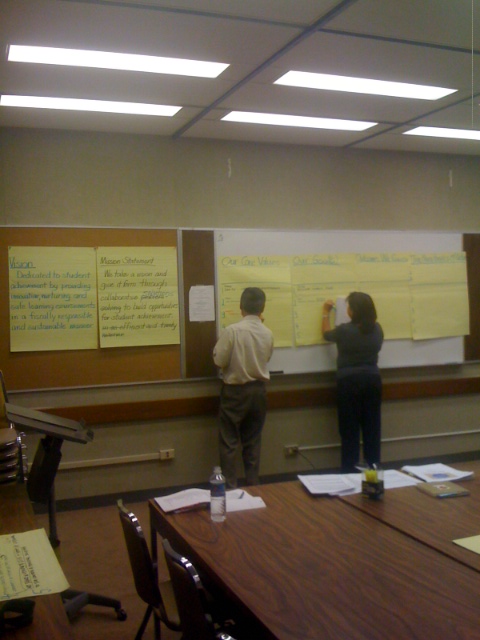
Over the past six weeks, our training division at SuccessHawaii has been under contract to the Hawaii State Department of Education, Facilities Management Branch. I am proud of the work we accomplished together, but I am even more satisfied knowing the quality of people we have representing us in this critical function of state government. These are highly motivated employees who are responsible for the design, development, and maintenance of our public school facilities.

In quick retrospect, the past month has been a hectic one. In looking back, it was the participants within each of these focus groups, which we had the good fortune of working with, that made all the difference. In a nutshell, these highly-qualified professionals (i.e. architects, engineers, and former businesspeople) are an amazingly positive and dynamic group of people that work so collaboratively together.

The training program’s topic was entitled: “The Continuous Improvement Process: Delivering the Ultimate Service through Positive and Productive Teamwork.” 

We started this process by conducting five (5) focus groups with the various branches that fall under the Facilities Management Branch within the Office of Business Services. We followed that up with a half-day “Summary” session in which we assisted them as facilitators to boil-down a ton of input from the previous five sessions. In the end, all the various stakeholders negotiated many options to arrive at their agreed upon mission: “We take a vision and give it form through collaborative solutions to build opportunities for student achievement.”


On reflection, it has been a mini-marathon of very rewarding training workshops that achieved the goal set forth from the start. And today we completed the final, all-day training session with nearly 70 participants. Now, as I sit at my computer to debrief my thoughts, I’m taken back to my days as an athlete way-back-when. I can recall those days of giving everything I had physically and mentally, to play at peak performance. At least, to my abilities. Whether we won or lost was never the issue, it was whether you knew that you gave it your “all”. In this latest training series with the DOE, I confidently walk away knowing that we did give our very best and that’s the bottom line. Finally, consider this relevant quote on excellence from legendary coach, Vince Lombardi:

“….I firmly believe that any man’s finest hours – his greatest fulfillment of all that he holds dear – is that moment when he has worked his heart out in good cause and lies exhausted on the field of battle – victorious.”

For-Profit Colleges: The Controversy

I recently spoke with a client of mine who I met when he was a corporal in the U.S. Marine Corps back in 2003. Days ago, he informed me that he was now attending the University of Hawaii at Manoa.  While I was proud to know that this young man was now attending a full-fledged university, I was more surprised that he didn’t get caught up in the marketing web to attend an online college. To be sure, he’s an anomaly. Most military members that I met over the past decade were enrolled in “for-profit” colleges. The most notable one that sells themselves hard on military bases: University of Phoenix. Its big business and they push hard for enrollment and the dollars that come with it. What I saw tonight on PBS Hawaii confirmed what I already had sensed. You too can check out this Frontline documentary, “College, Inc.”

It has bothered me for years seeing for-profit colleges and universities take advantage of our Hawaii-based military, simply to get their MGI Bill and all of our tax dollars that fund it (beyond the first $1200 an active duty soldier, sailor or marine puts in during their first year on active duty). Its ridiculous, but true. I saw it with my own eyes: these for-profit schools were hounding service members when they first arrived on base as newbies, signing them up and promising what sounded to be an Ivy League education. The nice part, as they sold it, was that it would be done all online. It sounds appealing for sure. And yes, they say it’s easier and much quicker to get a degree. But once you’re done, are their degrees worth the paper it’s printed on? I can’t say, but I don’t give the degrees too much credence. Sorry, but in my role as a previous HR Director responsible for hiring staff, it is the way I perceive it.

It’s catching up with them. For-profit colleges and universities that cater to non-traditional students are being watched closely for their hard-sell antics.  They are successfully capturing billions of federal financial aid dollars and often simply conferring degrees over the Internet. Now they’re feeling the pressure from federal regulators. In my estimation, it’s for good reason. Educating our future leaders is certainly big business; but it is not only about the nickles and dimes. These for-profit schools have an obligation beyond wall street balance sheets; it is a public trust matter. So far,this trust is being abused by these for-profits in a monstrous way.

Here’s what one critic summed up really well: “The ‘for-profit places’ charge students far more for the classes. The ‘for-profit places’ accept unqualified students, admit students who won’t find employment that will allow them to pay off the student loans. The for-profits direct the students into federal loans, most of which will never be repaid, leaving people in perpetual debt and the taxpayers with billions of dollars they’ll never collect, while some of the investors in for-profits make money on the taxpayers and students backs!”

For those who support (“make money”) for-profit colleges and universities like Jack Welch (former GE CEO/management guru/zillionaire), I ask you this question: Is profits or educating students more important? Why does for-profit colleges market and prey on the military, while top schools or even the community colleges do not? Here’s how one consultant succinctly put it: “It’s not about education; it’s a business. It’s about  the three M’s: Management, marketing and money.” Again, check out this eye-opening Frontline documentary, “College, Inc.”

Finally, let me be perfectly clear: I have no interest and nothing to gain here. But we the general public who are aware of wrongdoing needs to speak up and protect the less informed, especially those who are fighting for our freedom. I just want federal regulators to have the courage to stand up to tough guys like Welch, and keep pressing for the truth. And in the end, for justice to prevail.

You Do It For L-O-V-E

What do love and life insurance have in common? More than you might realize. The main reason you buy life insurance is because you love someone. Think of it as the ultimate act of selfless love. Life insurance isn’t glamorous or sexy, but it is essential to protecting you, the ones you love, and/or your business.

In my book, life insurance is a product of love. It may sound a bit sappy, but the toughest of us will wish we had it when our family most needs it. It’s your choice. Choose to leave a positive and lasting legacy, not a burdensome reminder of you being gone, along with your missed income.

Having a sound financial plan requires knowing which insurance and investments products to buy. But there are literally thousands of insurance policies, annuities, etc. from which to choose. That’s where a qualified insurance professional can help. Contact me today for your free insurance/estate analysis and review.

This video drives home this very powerful concept.

Here’s a free resource guide: “What You Need To Know About Life Insurance”.

http://www.lifehappens.org/pdf/printable-consumer-guide/life-insurance-pcg.pdf

Call Standing

For me, it may be purely psychological, but standing on my feet while talking on the phone–specifically when it concerns a serious matter–gives me a boost of energy and for sure, a bit of projection in my voice.

Then there is the health issues involved with prolonged sitting and being too idle. In fact, a 2010 NY Times article, “Stand Up While You Read This!”, cites some empirical evidence. The author, Olivia Judson, an evolutionary biologist, starts her article by proclaiming, “Your chair is your enemy.” Judson says, “several strands of evidence suggest that there’s a ‘physiology of inactivity’: that when you spend long periods sitting, your body actually does things that are bad for you.”

While I’m personally not implementing any radical solutions to my “sitting-too-much-syndrome”, like replacing my sit-down desk with a stand-up one, and equipping my desk with an attached treadmill so that I can walk while I work, I suggest standing up when you’re on the phone.

And I’m not alone. A recent USC study found that your brain’s information processing speed increases 5 to 20 percent when you’re standing.  You and I are in fabulous company. Luminaries such as Thomas Jefferson, Ernest Hemingway and Winston Churchill all stood while they worked. The bottom line: Heed Judson’s warning, “…whatever you choose, know this. The data are clear: beware your chair.”

No Goose Left Behind…

The following post comes from an ongoing training/consulting project we have with a large client organization here in Hawaii. We are in the midst of developing the custom-designed training curriculum, which began with a strategic planning and leadership training session. The Story of The Geese is a part of our “teamwork” module. It provides a perfect example of the importance of teamwork and how it can have such a profound effect on a team.

The Story of The Geese

This fall when you see geese heading south for the winter flying along in the “V” formation, you might consider what science has discovered as to why they fly that way.

Fact

As each bird flaps its wings, it creates an “uplift” for the bird immediately following it. By flying in a “V” formation, the whole flock adds at least 71 % greater flying range than if each bird flew on its own.

Fact

Whenever a goose falls out of formation, it suddenly feels the drag and resistance of trying to go through it alone. It quickly gets back into the formation to take advantage of the “lifting” power of the bird in front of it.

Lesson

If we have as much common sense as a goose, we will stay in formation and share information with those who are headed the way we want to go. We should be willing to accept their help and give our help to others. It is harder to do something alone than together!

Fact

When the lead goose gets tired, it rotates back into the formation. Another goose takes over and flies to the point position.

Lesson

It is sensible to take turns to do the hard and demanding tasks. It pays to share leadership. As with geese, people are interdependent on each other’s skills, capabilities, and unique arrangements of gifts, talents, or resources.

Fact

The geese flying in formation honk from behind to encourage those up front to keep up their speed.

Lesson

People who are part of a team and share a common direction as well as a sense of community can get where they are going more quickly and easily because they are traveling on the thrust of one another and lift each other up along the way.

The Importance of Encouragement

We need to make sure our honking is encouraging – Words of support and inspiration help energize those on the front line, helping them to keep pace in spite of the day-to-day pressures and fatigue. In groups and teams where there is encouragement, production is much greater. ‘Individual empowerment results from quality honking’.

Fact

When a goose gets sick, wounded, or shot down, two other geese will drop out of formation with that goose and follow it down to lend help and protection. They stay with the fallen goose until it dies or is able to fly again. Then, they launch out on their own, or with another formation to catch up with their flock.

The Importance of Empathy and Understanding

Albert Schweitzer tells the story of a flock of wild geese that had settled to rest on a pond. One of the flock had been captured by a gardener, who had clipped its wings before releasing it. When the geese started to resume their flight, this one tried frantically, but vainly, to lift itself into the air. The others, observing his struggles, flew about in obvious efforts to encourage him; but it was no use.

Thereupon, the entire flock settled back on the pond and waited, even though the urge to go on was strong within them. For several days they waited until the damaged feathers had grown sufficiently to permit the goose to fly. Meanwhile, the unethical gardener, having been converted by the ethical geese, gladly watched them as they finally rose together and all resumed their long flight. For this reason, I aptly named this article: “No Goose Left Behind”.

Finally, if we have the sense of a goose, we will stand by our team members in the good, as well as, the challenging times. So, the next time you see a formation of geese, remember…it is a REWARD, a CHALLENGE and a PRIVILEGE to be a CONTRIBUTING MEMBER of a TEAM.

Economic Impact of Disability

The rate of disability among working women in the United States has grown almost twice as fast as the rate among working males during the past decade (over 60 percent and 32 percent, respectively), according to Social Security Administration data. Yet half of women (51 percent) are unprepared to cover their living expenses for three months or more should an accident or injury leave them unable to work, according to the 2008 Worker Disability Planning and Preparedness Study, conducted by the Council for Disability Awareness (CDA).

Two-thirds of Americans are living paycheck-to-paycheck*. This makes the consequences of losing income serious for most workers and their families. The ability of women, in particular, to cope with the financial impact of disability may worsen as household credit card debt is at an all-time high—averaging close to $10,000—and personal savings rates are at an all-time low. To make matters worse, women tend to save less than men, according to the Bureau of Labor Statistics.

“With disability on the rise for both men and women, it’s clear most Americans need to better prepare for an income-limiting disability. But this is especially appropriate for women who are experiencing even higher rates of disability while, in general, being less prepared than men,” says Barry Lundquist, president of the CDA, a nonprofit organization focused on helping the American workforce become aware of the growing incidence of disability.

Financial risks of disability can be severe and long lasting.
Disability is one of the leading causes of personal bankruptcies and mortgage foreclosures in America. During a disability, your ability to earn an income may stop, while increased medical bills and ongoing living expenses can quickly deplete savings and other resources, such as retirement and college savings.

“Workers, and in particular women, who haven’t discussed how they would financially manage their financial affairs if a disability arises should begin to realistically think through what would happen if they were unable to work and earn a living,” Lundquist explains. “Creating a disability financial plan should follow—one that helps estimate the impact that disability would have on personal expenses and where income would come from.”

Lundquist encourages all workers to understand their workplace sick pay and disability benefits. He explains that healthy lifestyle habits like seeing a doctor each year and quitting smoking can pay dividends, because leading a healthy lifestyle can reduce the likelihood of becoming disabled in the first place. “Disability planning and preparedness is critical, especially for working women,” he says.

For more information about the survey and for tools and tips on how to financially prepare for disability, visit the Council’s Web site www.disabilitycanhappen.org.

* Parade Magazine, 2008.