Launching SEA Video Series

Serving kamaʻāina since 2001. Unbiased, objective financial education. As a guiding principle, we focus on two things: what truly matters to you and what you can control.

  • In this series, we’ll focus on evergreen topics, meaning we want them to stay relevant for years. No faddish stuff. Always offering real value that doesn’t expire with market fluctuations. This type of content is only to educate and inspire potential clients to take action and solidify their financial plan and investment strategy.
  • We’ll keep most of our videos short and concise—ideally under 3 minutes—to help our viewers and not bore them to tears.

Viewers will find a wide variety of videos covering the expected topics like portfolio management, insurance strategies and estate planning, as well as the unexpected and unique. My goal is to offer up real world solutions and effective strategies—not just good ideas–from my over two decades of industry experience. If you’d like to learn more about investing for retirement, protecting yourself from life’s uncertainties, running a small business, planning for longevity, or simply getting a clearer understanding of estate planning, you’re in the right place.

Stay tuned and don’t forget to subscribe. E komo mai—welcome. Glad to have you here, aloha! For full disclosures please see our website at https://www.seafinancialhawaii.com/

Hawaii-Japan Connection: Foreign National Life Insurance

Byodo-in Buddhist Temple at the Koolau mountain range in the Leeward side of Oahu, Hawaii

SEA Underwriting Guidelines

In Hawaii, our proximity to and longstanding ties with Japan mean our firm works with an unusually high number of clients originally from Japan (and more recently, South Korea). Hawaii has long been especially attractive to Japanese investors, thanks to its geographic proximity to Japan, its popularity as a travel destination, and the strong cultural affinity many Japanese have for Hawaii.

However, keep in mind that these guidelines also apply to clients from other Asian countries.

Non-U.S. citizens are typically placed into one of two categories:

1. Wealthy Global Citizen Foreign National: Non-U.S. citizens who live outside the U.S. and meet specific financial verification for wealthy global citizen and connection to U.S. criteria.

2. General Foreign National: Non-U.S. citizens who live either in or outside the U.S. who meet connection to U.S. criteria, but not financial verification for wealthy global citizen criteria.

Wealthy Global Citizen Foreign National: Financial Verification

  • Minimum global net worth of $5 million or income over $200,000 per year q Has at least $1 million in the U.S. (verifiable* U.S. assets)
  • U.S. bank account showing a minimum balance of $100,000 after paying the first-year premium.
  • Specified total amount of life insurance is justified based on U.S. income and estate tax considerations

General Foreign National Citizens: Financial Verification

  • Specified total amount of life insurance is justified based on U.S. income and estate tax considerations

Effective January 19, 2025, SEA Financial Hawaii’s underwriting team is pleased to offer new opportunities within the foreign national market. The following updates will now apply, enabling coverage for a broader set of your foreign national clients, specifically:

• Higher maximum age limits to age 75

• Raising minimum face amount and establishing net worth requirements

• Domestic auto-bind limits permitted for permanent U.S. residency

• Term coverage available for business coverage scenarios

• Additional approved countries

What You Need to Know if You’re a Japanese Citizen

Consideration may be given for Japanese citizens who hold a permanent green card valid for 10 years or more, are currently residing in the U.S. and have been in the U.S. at least 12 months.

Also, the policy must be paid in U.S. dollars and funded from a U.S.-domiciled bank. And critically important to remember, the applications, amendment(s), and all requirements must be completed in the U.S.

Note: Make sure your insurance agent or financial advisor handles this correctly. Policy delivery documents must be completed within the U.S., unless a Limited Power of Attorney (LPOA) was submitted with the application packet on the date of application. Remember, a Limited POA may be used for delivery only.

Connection to the U.S. Requirements

If client or individual owner is residing in the U.S. with a temporary green card, unacceptable Visa type, or no Visa or green card, everyone must have established U.S. residency of three years or more and either own U.S. residential property, or a U.S. company or have documented earned U.S. income and/or assets.

If client or individual owner has not resided in the U.S. for three years or more, each individual must have all of the following:

• Valid government photo identification

• U.S. residential property ownership

• Documented earned U.S. income

• Proof of assets in a bank account

Married to a United States citizen? – This is one way to satisfy the U.S. connection requirement. Keep in mind, if you haven’t applied for permanent residency or have no other ties to the U.S., you and your U.S. spouse may need to apply for coverage together for you to qualify.

Every situation is unique. As fiduciary financial planners, we take the time upfront to understand your goals and work with you to uncover your needs and your “why”—the important reasons behind securing coverage in the U.S. At SEA Financial Hawaii, we believe strongly in creating custom-designed solutions that align with your individual priorities. Whether it involves investments or life insurance, we are committed to asking the right questions to help ensure your long-term success.

For additional questions on our Foreign National business, please contact SEA Financial Hawaii’s Specialty Underwriting team at 808-532-1516. We are a bilingual office, offering services (including notary and legal services) in both English and Japanese, and proudly serve clients across the entire state of Hawaii. Aloha!

How to SEA (Strategically Engage and Adapt) to Manage Market Volatility

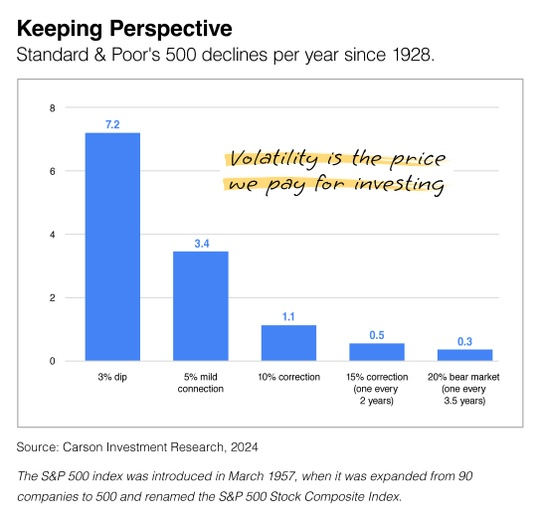
The trader’s saying, “The stock market takes the stairs up and the elevator down,” perfectly captures how swiftly stock prices can change—something we’ve witnessed quite clearly in recent days.

Here’s how the recent stock market drop unfolded: First, disappointing Q2 corporate reports from several high-profile tech companies set the stage, compounded by Federal Chair Powell’s discouraging comments about short-term interest rates. This was followed by confusion in the Japanese market and other international issues, all mixed with uncertainty surrounding the upcoming election. In an instant, stock prices pulled back.

However, it’s important to remember that volatility is a natural part of the investing process. Historically, investors have experienced pullbacks of 3 percent more than seven times a year, and since 1928, a 10 percent correction has occurred at least once annually. When seen through this historical lens, recent market fluctuations aren’t as unusual as they might initially appear.

I understand that it can be unsettling when stock prices pull back or enter correction territory. The financial media often amplifies the day’s events, making them seem overwhelming and causing some investors to lose sight of their long-term strategy.

If you’re beginning to feel like “it’s different this time,” please reach out to me as soon as possible. I’d like to hear your perspective and work together to help us find a more comfortable position moving forward. -GW

Trust or Will in Hawaii? Deciding the Best Option for You

“The best time to plant a tree was 20 years ago. The second-best time is now.”

-Chinese Proverb

This well-known Chinese proverb serves as a simple reminder that it’s never too late to start anything—whether it’s chasing a lifelong dream, investing for retirement, or, in the case of this article, drafting your estate plan. Experts emphasize that regardless of your net worth or age, having an estate plan—at a minimum, a Last Will and Testament—should be a top priority.

I frequently share this sentiment with my financial planning clients. A common response is: “Garrett, isn’t an estate plan just for the wealthy?” It’s a valid question, and it’s crucial to understand the facts. Documenting instructions for the transfer of one’s possessions has ancient origins, some tracing back to ancient Rome. Clearly, explicitly outlining one’s final wishes has stood the test of time.

The American Bar Association defines estate planning as “a process involving the counsel of professional advisors, including your lawyer, accountant, financial planner… covering the transfer of property at death…” The core document most often associated with this process is your Will. In essence, estate planning involves setting up a plan for the management and transfer of your estate after your death, using a Will, Trust, or other legal mechanisms.

When it comes to basic estate planning, one usually starts with a Will. However, Wills are not an end-all. As with all things related to financial planning, it depends on your situation. Depending on your assets, children, and property, having a Will means there will be legal proceedings (probate) before any asset distribution. This is where having a Trust can be beneficial.

If you’ve wondered if estate planning is right for you, understand this: It’s more about your wishes and goals than about the monetary value of your assets. It also clarifies how you want your affairs handled if you are unable to manage them yourself. The bottom line is that estate planning is not just for the wealthy. Even people with modest assets need a written plan. Like many other things in life, the biggest step is simply getting started.

So, what is a Will? It’s a legal document that expresses your last wishes for the distribution of your property and other assets. Some say a Will is one of the single most important documents a person can have. Yet, many Americans delay dealing with it for various reasons. Some think they’re “too young” or “too old” to need a Will. Others believe they don’t have enough net worth to necessitate a Will.

Do you need both a Will and a Trust? It’s a valid question. There are significant differences between the two. A Trust goes into effect as soon as it is signed, whereas a Will takes effect after you pass away. Another major difference is that Wills are public records, while Trusts are private. Many choose a Trust for privacy reasons alone.

Technically, what is a Trust? Trusts come in many varieties, nearly a dozen at last count. All Trusts are legal entities with separate and distinct rights, like a person or corporation. The type of Trust you need depends on your circumstances, and consulting a professional is essential.

While there are many online resources for estate planning, it is vital to do your due diligence and find an estate planning attorney you trust. You’ve spent a lifetime accumulating your assets, so be diligent in selecting an attorney to ensure your estate transfers smoothly to your heirs. Just like engaging with a fiduciary financial advisor, the value of hiring an estate planning attorney lies in the counsel they can offer for your unique situation.

Having an estate plan gives you control over your wishes, not the courts. As a veteran attorney once told me, “If you do not have a Trust, the courts will have one for you. However, you may not like it, and by then, it will be too late.” This may not be eloquent, but it drives the message home.

In financial planning, there aren’t many guarantees. But here’s one: even if you don’t have many assets, your estate plan ensures that everyone will know your wishes. That alone is invaluable.

After developing your estate plan with your attorney, remember don’t just put it in a drawer and forget about it. As your life evolves, your estate planning documents should reflect those changes.

In summary, it is imperative to work with an experienced professional. There are many moving parts in estate planning. Life is unpredictable, but planning today ensures your tomorrow is exactly as you envision it. If this article can do one thing, I hope it encourages you to start planning now. It will make things easier for your family later.

Garrett Wheeler serves as a board member with Yacht Harbor Towers AOUO, Inc. He is a Honolulu-based fiduciary and financial advisor with SEA Financial Hawaii. Curious about which type of estate plan is right for you? Contact us today and we’ll email our quick and easy quiz to find out. Aloha!

Note: Originally published in Building Management Hawaii

Give the Gift of a Lifetime

Your family means the world to you. You want your children and grandchildren to be financially protected, so they have the opportunity to enjoy life, live comfortably and worry less. As a fiduciary, financial advisor, I’ve helped clients’ open traditional brokerage accounts in their own names, and we’ve earmarked the money for their child (or grandchild). This lets my clients’ access their money while their child is still a minor and keep control of it after their child reaches adulthood. Then, when they feel their adult child is ready for it, they can transfer the account to an account in their child’s name. Or they could make their child the beneficiary of the account if they die or become incapacitated. With greater adult control comes higher taxes, though. They are taxed on any earnings at their current tax rate, rather than at your child’s. They will also need to keep in mind gift tax rules when deciding to turn over the account funds to their child, meaning it may not make sense to transfer all of the account’s assets at once. Life Insurance on a Child? After 22 years in this industry, I have heard the many pros and cons on buying a life policy on kids. I sincerely do not have a ‘horse in the race’. As a fiduciary, I am an investment advisor, but I do have extensive experience with insurance planning, as well. Without question, I am always going to do what is in my client’s best interests. And like every other financial product out there, it all depends on your unique circumstances. I would tell parents, first, assess your household budget. Then, take a strong, objective look at your own life insurance needs before buying a policy for your kids. Because, in general, your own life insurance is more important than your child’s. But if you’ve got it covered (human life value ‘covered’, that is), then there are some real benefits to child life insurance policies. Advantages such as, guaranteed insurability, and a cash value life policy acting as a supplemental savings vehicle for your child. And lastly, which we hope and pray, we will never need, is to cover costs if the worst were to happen. On a positive note, you can help your children or grandchildren preserve their ‘insurability’ by putting life insurance in place while they are young. When we are younger, many of us think we’re invincible. Take it from me (after a life-altering spinal cord injury at age 39) we are not! Whatever route you decide to take to give your children or grandchildren an early start down the path of financial security, either financial solution will almost certainly be better than not doing anything at all. Whether it is a traditional brokerage account, or a cash value life insurance policy, it opens up opportunities for helping pay for college, buying a new home or supplementing their retirement down the road. In my estimation, that’s a gift of a lifetime. Email me at garrett.wheeler@securitiesamerica.com for a free PDF resource brochure from Securian called, Gift of a Lifetime. Aloha! -GW SEA Financial Hawaii does not provide legal or tax advice. The information herein is general and educational in nature and should not be considered legal or tax advice. Tax laws and regulations are complex and subject to change, which can materially impact investment results. SEA Financial Hawaii cannot guarantee that the information herein is accurate, complete, or timely. SEA Financial Hawaii makes no warranties with regard to such information or results obtained by its use and disclaims any liability arising out of your use of, or any tax position taken in reliance on, such information. Consult an attorney or tax professional regarding your specific situation.

It’s RMD Time: It Ain’t 70 1/2 Anymore!

In 2020, President Trump signed the SECURE Act (Setting Every Community Up For Retirement Enhancement) into law as part of a far reaching “Further Consolidated Appropriations Act of 2020”. Although the SECURE Act was only signed into law about a year ago (December 2022), it’s mandates are already impacting U.S. small businesses and their employees alike.

What are RMDs (Required Minimum Distributions)?

The first word in this acronym stands out and is key: Required. Required Minimum Distributions (RMDs) are minimum amounts that IRA and retirement plan account owners generally must withdraw annually. The first RMD must be taken by April 1st of the year following your 73rd birthday. Let me explain let’s say you turn 73 years old on August 1, 2023. In this case, your initial RMD would be start by April 1st, 2024. In other words, your first RMD must be taken by April 1st of the year after you turn 73. As a side note, if you were born after 1960, then beginning in the year 2033, the SECURE 2.0 will extend the age at which RMDs must start to 75 years old. There are a lot of moving parts. But as you can see above, the schematic by Michael Kitces, explains the RMD details much better than just words alone.

There are a lot of detail to RMD planning. As an example, retirement plan account owners (like traditional IRAs) can put off taking their RMDs until the year in which they retire (unless they own 5%+ of the business underwriting the plan). Just know this, if you choose to delay taking your RMD, you’ll need to combine your RMDs (first and second) in the same year. That may create a problem by pushing you into a higher tax bracket. Talk to your trusted tax advisor to ensure you are following the guidelines and deadlines! Because, as with all things government-mandated, if you miss your RMD deadline, the penalties can be severe. Here are the IRS guidelines

A Reduced Penalty. Wait, What?

Yes, you read correctly. In the past, it was widely known in the planning community that RMD penalties were heavy. How steep? Well, under the prior rules, if a retiree overlooked or just flat-out missed the RMD deadline, they would be hit with a painful penalty of 50% of the amount not taken on time. Today, presently, that penalty has thankfully been reduced to 25%. And lessor yet, 10%, if you correct the oversight within two years.

By the way, even if you inherit a qualified (IRA, etc.) retirement account, it is still subject to an RMD. Note: Roth IRAs escape the RMD requirement in the account (IRA, etc.) owner’s lifetime, but get this: Your heirs will have to take RMDs). Nevertheless, overall, I like the changes and updates to RMDs. It allows hardworking Americans to keep their hard-earned money in retirement accounts for a longer period of time to earn more money for their future. And given the fact that we are all living longer, this can only help. -GW

At SEA Financial Hawaii, we do not provide tax, accounting, or legal advice. Clients should consult their own independent advisors as to any tax, accounting, or legal statements made herein. This material is being provided for informational or educational purposes only and does not take into account the investment objectives or financial situation of any client or prospective clients.

Do I Need a Trust?

Oftentimes, trusts are used as a tax-reduction solution in the estate planning discussion, as part of our comprehensive financial planning process. But it can do so much more in the way of giving clients control over their immortal destiny. As you’ll learn, there are many types of trusts that can be used as part of an individual’s overall financial planning strategy. In our day-to-day meeting with advisory clients, we are finding that individuals need to also consider ‘non-tax reasons’ for the use of trusts. What are these non-tax reasons? Well, they include ensuring that assets pass to the intended beneficiaries at the time and in the manner desired. And defensively, to protect the assets passing to beneficiaries instead of creditors.

I’m often asked by some clients, ‘Do I need a Trust?’ And like many things planning, it depends on your circumstances. But without reservation, I wholeheartedly believe that trusts provide significant benefits.

And similarly, the reasons for establishing a trust are as different as the people who have them. Like financial planning, there are no two alike due to the uniqueness of each person’s needs, desires and concerns. Regardless of their personal differences, many people discover that a trust is a smart addition to their estate strategy. A properly structured trust can be a prudent way to hold and distribute assets. And, depending on the type of trust established, it can protect assets from creditors, reduce estate taxes, and allow for greater control over asset management and distribution after death.

Because SEA Financial Hawaii does not give tax or legal advice, we encourage individuals to consult with their tax and legal advisors to explore the concepts discussed below. However, we do have vetted resources—professional alliances—with various attorneys and firms that we share with clients. In fact, I accompany my clients on their first visit with an estate planning attorney, especially if being referred by us. This referred group of professionals can work you to help determine if, and how, a trust can be used as part of your estate strategy.

So, what is a trust? Investopedia says that a “trust is a legal entity with separate and distinct rights, similar to a person or corporation. In a trust, a party known as a trustor gives another party, the trustee, the right to hold title to and manage property or assets for the benefit of a third party, the beneficiary.” https://www.investopedia.com/terms/t/trust.asp

Simply put, a trust is an arrangement where one person agrees to hold property for the benefit of another person or persons. This is especially useful in situations where the beneficiary is vulnerable or under legal disability, such as when:

  • One spouse wishes to protect assets from their creditors so that they may benefit the other spouse.
  • The beneficiary is a minor.
  • The beneficiary is unskilled in financial matters.

Of course, this is only a cursory list. In the real world, the kinds of situations and outcomes are very broad, and again, unique as the people who have trusts. Years ago, I was told if you have a spouse, children and/or you own a home or substantial assets, you need a trust.

There are all kinds of trusts, with varied uses and purposes. But they all fall into one of two classes:

  • Living and
  • Testamentary.

Living trusts can be either revocable or irrevocable, and testamentary trusts are created at death based on terms in your will. The discussion that follows focuses on some of the more commonly used trusts, including an explanation of any tax advantages.

A Revocable Living Trust is a trust created during the grantor’s lifetime and allows the grantor (you) to maintain total control over the trust during your life. A revocable living trust is an efficient and effective way to transfer property at the time of the grantor’s death.

An Irrevocable Living Trust is a trust that is established by the grantor while they are still alive and which, by its terms, cannot be revoked or terminated by the grantor. One reason to choose irrevocability is to remove the trust assets from the grantor’s taxable estate. An irrevocable life insurance trust (ILIT) is probably the most common example of an irrevocable living trust.

A Testamentary Trust is a trust established under a decedent’s will is known as a testamentary trust, and the grantor is referred to as the “testator,” that is, the maker of the will. Testamentary means “at death,” and such a trust has no legal value or effect until the testator’s death, as it does not come into being until the testator dies. Because a testamentary trust is not actually established until death, the trust may be modified or revoked beforehand by amending the will. After the grantor’s death, the testamentary trust becomes irrevocable. Because it is created by a will, the assets of a testamentary trust are subject to probate and may be taxed as part of the estate.

As a fiduciary financial advisor, my mission is to do what is in the best interest of my clients. When clients ask me why they should have a trust documented and recorded, it comes back to one thing for me: Your desires and wishes. In my work, I find that most trusts are created to help minimize transfer tax consequences (i.e., estate and gift taxes, generation-skipping tax, etc.). However, I often share with my clients that they may offer advantages beyond the surface tax savings. Most importantly, trusts allow you (the grantor) to do what you really want to do with your assets, possessions and wealth. Again, it gives you control over your wishes. Not the courts. That’s invaluable. Years ago, a veteran advisor told me, ‘Just tell your clients this: if they don’t have a trust, the courts will have one for them. However, they may not like it, but by then, it will be too late…’ Yes, not eloquent, but it drove the message home for me.

Finally, here are more non-tax advantages of using trusts. First, control. Gives you oversight as the grantor. Then there is financial management. A trustee you select can ensure beneficiaries are taken care of. And it also provides protection against creditors. An important benefit to some is the use of ‘staggered distribution ages. I have a client who wanted to ensure that the trust made distributions to his children over a period of time to enable them to become more mature and learn how to handle financial matters. In this client’s case, income from the trust was distributed annually plus one-quarter of trust funds (corpus) at age 25, 1/3 at age 30, ½ at age 35 and the balance at age 40. If there was no trust in place, the inheritance would be handed to the children at the age of majority (Hawaii recognizes the age of majority as age 18).

As this brief article explains, it is imperative that you work with an experienced professional. We can provide you with an overview, as well as the costs associated and the complete details including a referral to an estate planning attorney. As indicated, there are a lot of moving parts. But remember this: Life is unpredictable, and procrastination can really hurt you. So, take action today to protect those you love. And I guarantee, you won’t regret it. -SEAFIHI

At SEA Financial Hawaii, we do not provide tax, accounting, or legal advice. Clients should consult their own independent advisors as to any tax, accounting, or legal statements made herein. This material is being provided for informational or educational purposes only and does not take into account the investment objectives or financial situation of any client or prospective clients.
Key Points to Help you Feel more at Ease with this Nutty Volatility

Epic volatility is the norm? Check out this list from the LPL group. First point they make: This. Is. Normal. I love it. Good stuff. The message is this: Hang in there, you’ll be rewarded. And finally, to make you feel better, you’re not alone…

LPL’s article started off with a reassuring message in these times of nutty volatility. It said, “Although market uncertainty might make you feel jittery, keeping your investment cool is critical to your financial success.” I totally agree. No doubt, it’s difficult watching your cherished portfolio bob up and down. Before you drive yourself batty, consider these six things before, as LPL puts it, “acting out of emotion”:

1. Again, remember “This. Is. Normal.”

It goes with the territory and that is, ‘volatility is part of investing’. Yep, when stock prices steadily rise with little movement, it’s easier said than done, but don’t forget the fact that volatility is incredibly common. It’s the norm, not the exception.

The past teaches. Always remember what happened in the past. If you’re old enough, you’ll recall the early 2000’s ‘tech bust’, then again in 2008 with the big boom. It happens. That’s why they call it, ‘cyclical’. The market dips like clockwork almost annually. Don’t fret, and especially don’t freaking panic. Because, let’s face it, the ‘best part may be what happens after these dips’, says LPL. I agree.

Get this, research show that after a correction, the average returns exceed 23% over the next 12 months.1 Nice!

2. Patience, my friend. You’ll be (typically) rewarded.

LPL did a good job with their research. LPL states, “Investing in the stock market gives you a chance to profit from innovation, economic progress, and compound growth. But to get results, you need patience and time.” LPL went on to say, “On this note, it’s helpful to keep the market’s performance history top-of-mind:

Since 1990, the Dow Jones Industrial Average has achieved 9.5% annualized gains, including dividends. Even if you were to look at shorter time horizons since 1950, the S&P 500 has risen 83% of the time across a five-year horizon, 92% across 10-year periods, and 100% of all rolling 15-year periods.2

And while history can’t predict future performance, it can give you an idea of what could happen if you try to take a shortcut or “panic sell” when markets are fluctuating:

From 1990 to 2020, the S&P 500 Index’s annualized gain was 7.5% (excluding dividends), but the average equity investor’s return was only 2.9%.Why the 4.6% gap? Because when stock prices begin to fall, many investors given in to fear, which drives them to sell their investments – even though it may not be in their best interest.”

My fav investor, like millions of others’ is the ‘oracle of Omaha’, Warren Buffet. He once famously said, investing in the stock market is “a way for the impatient to transfer money to the patient.”4

3. Market timing doesn’t work

We’ve heard it over and over. But clients keep trying to outsmart the smart guys who do this for a living. Analysts and CFA’s keep telling us not to time the market, it could be a costly mistake. Do people listen? Of course, not. We’re human.

LPL says, “It’s impossible to predict when a stock or the market as a whole will peak or bottom, even if you’re an expert. In a market decline, if you sell in fear of losing more, you’ll then have to figure out when to jump back in, which is equally difficult. Plus you risk locking in your losses if you re-enter at the wrong time. For example, between 1990 and 2020, the biggest gains (and losses) in the market happened within days of each other, which means you didn’t have to be out of the market for long to miss out on the upswing.Because even in “bad” markets, there are a lot of good days, and you want to be “in” for those days.”

4. No Sweat, Opportunities abound

The creative analyticals tend to win at this game of looking at volatility from both buying and selling angles. LPL reminds us, “When stocks decline, you can “buy in” at a lower price and potentially make money when the market rights itself. When the decline is part of an overall cycle, this means stocks are trading below their intrinsic values, which means they offer an improved price-to-earnings ratio.”

5. LPL says, “There are ways to enjoy a smoother experience

Good ‘ol dollar-cost averaging(DCA). It’s simple and basic, but it works. DCA can help reduce the overall impact of price volatility and lower the cost per share of your investments. Forget about timing the market; trying to get in and out at the “right” time. Instead, dollar cost averaging can be a better strategy to help you avoid timing mistakes. Ultimately, it removes the dreaded, ’emotion’ from your decision-making process. DCA can help keep your long-term goals in mind.5

6. We’re all in it together. You’re not alone

As a final reminder, LPL tells us that, ‘in times of market volatility and economic uncertainty, remember that you’re not alone.’ Good advice for the wary. The best advice LPL had in their entire article was this: Consult your financial advisor for additional perspective and context, and review your investment strategy from a life-goals perspective to ensure you’re headed in the right direction to pursue your financial goals. As a fiduciary financial advisor, I commend LPL’s wisdom. Smart guys.


Source: LPL Research, Ned Davis Research, FactSet 4/29/22
Source: LPL Research, FactSet 4/29/22
Source: LPL Research, Bloomberg, DALBAR, ClearBridge Investments 6/30/21
Source: “Winning In The Market With The Patience Of The Wright Brothers And Warren Buffett,” Forbes, (January 2018).
Source: https://www.forbes.com/advisor/investing/dollar-cost-averaging/

This material was prepared by LPL Financial, LLC.

Heads up, Military Servicemembers and Federal Employees! What You Need to Know about the Thrift Savings Plan

For the past twenty-two years I’ve worked with clients who have a wide variety of workplace retirement accounts. From 401(k) to 403(b), including the Thrift Savings Plan (TSP). All of these programs vary in terms of their investment offerings, fees, and other characteristics. But the largest employer in the country–the U.S. government–has the TSP. It is the Federal government’s own ‘defined contribution’ plan. Both civilian Federal government employees (i.e. GS-types) as well as military servicemembers have access to the TSP. In fact, even our U.S. military veterans, can choose to keep their TSP accounts. One caveat: Veterans can no longer make contributions. But there are a multitude of things we can do to remedy that issue.

As a whole, all workplace-defined contribution plans are pretty similar in their features (i.e., many today offer Roth options, as well as, employer matches). However, the one big thing that makes the TSP unique is that it has lower fees compared to private-sector plans. This is a good thing. Another unique feature is that it has a fixed-income investment option, which is exclusive to the TSP.

Last year (2022), the Thrift Savings Plan saw some major changes, including the opening of a “Mutual Fund Window”. This is another positive, I believe. What it does is it supplements the previously very limited TSP offering of investment funds. One additional thing to note: Participants need to know that the associated expenses make it quite pricey. Another techy update to the TSP was the introduction of a smartphone app. This is cool, but it requires some time to implement. I know this because I recently helped a longtime client (a ‘nuke’ from Navy/Pearl Harbor who moved to New Jersey) navigate these new changes. He had to decide if investing through the Mutual Fund Window made sense for him; it did. We had to go through an entire re-registration process for the new site via the mobile app to ensure his critical information (i.e. beneficiary information) got transferred correctly.

It only makes sense that the majority of my military clients transition into new “encore” careers. They’re still quite young in comparision to the traditional, civilian retirement age here in the U.S. of age 60+. One thing I always emphasize is the need to compare and contrast what they have (TSP) versus what is now available to them (i.e. 401k, etc.). We always start by looking at balancing their new cash flow–what the can afford to sock aside–especially during their transition period.

As for my clients who are still on active duty, it requires an annual review like many of my civilian clients. What’s different about my valued military guys is this: they deploy. And when they deploy to combat zones, there are benefits, as well as related TSP considerations to be aware of. For one, their income earned while deployed in a combat zone is tax-free. This is a good thing, for sure. But we need to keep an eye on woefully blending or commingling this tax-free combat pay with taxable earnings. This messes things up. But we can work to prevent this by planning for it. From the get-go, I implore my military (and civilian) clients to communicate and keep me posted on recent changes, like going on deployments. We can avoid issues by making Roth contributions during periods where income is not taxed. Another point worth noting during a period of combat deployment is that the annual deferral limit increases quite drastically. Again, a good thing. This is an opportunity for them to contribute even more money to the TSP. Of course, it all boils down to cash flow. And very much like their civilian counterparts, I find that every single military client has a unique set of circumstances.

The bottom line is that the TSP is very similar to the other workplace retirement plans, such as the 401(k). However, Federal employees and especially, our hard-fighting military servicemembers have a very different job–they serve our country! For this primary reason, it is my mission to give back and serve their families.

What is an RIA, anyway?

An RIA is a registered investment adviser. Is that a stockbroker? No. Here’s an objective, succinct piece from TD Ameritrade. It explains the stark differences between an RIA and other financial planners and registered reps from broker-dealers. As I shared in my New Year’s article (December 28, 2022), you would think that all financial advisors are legally obligated to act in the best interests of their clients, right? Surprisingly, the answer is no. Only fiduciary financial advisors are required to act in the best interests of their clients. I’m still blown away by that, and clients of investment salespeople should be too.

Benefits of Working with an RIA (TD Ameritrade)

RIA’s are fiduciaries. It is what sets them apart professionally. That word, fiduciary, means a lot. It is an odd word, but arguably the most important word in financial planning and wealth management. It originates from the Latin word, fidere (“to trust”). But as I pointed out previously, it is much more than just a word. It is a service mindset. Serving others’. As fiduciary financial advisors (vs. commission-based agents), we are legally obligated to act in your best interest when helping you make decisions about your money. Do yourself a favor, work with a fiduciary.

Legal disclaimer

The content on this page provides general consumer information. It is not legal advice or regulatory guidance. The TWG LLC updates this information periodically. This information may include links or references to third-party resources or content. We do not endorse the third-party or guarantee the accuracy of this third-party information. There may be other resources that also serve your needs. Aloha!