Pearl Harbor: 70th Anniversary

Last night I spoke with my Aunt Marie, my mom’s sister on the island of Maui.  Back in 1941, she turned three years old on what would become a very infamous day: December 7th. She shared how her birthday party was cancelled, of course. And instead, she and my grandparents spent much of the day in a makeshift bunker, instead of blowing out candles.

She described the bunker as having a dirt stairway leading down to a soil-rimmed, barren room. Not a place a three year old should spend her birthday. But in the scheme of things, my family and Maui was very fortunate. Ninety some miles away, things were very different on Oahu. The rest, as they say, is history.

On this 70th anniversary of the attack on Pearl Harbor, I am inspired by all who sacrificed so much on that day that changed America forever. I thank all of those brave heroes for their courage and for the freedoms they fought so valiantly to preserve for all of us Americans. On this day, let us all continue to honor their enormous sacrifice and strive to live up to their incredible legacy.

Got Grit?

We all know gritty, successful people. But why are they successful, and how do they do it? Some might think that only certain people have what it takes to make it happen and achieve their goals. But according to Heidi Grant Halvorson from the Harvard Business Review, they would be flat-out wrong.

A motivational psychologist, Halvorson provides more detail in her following article outlining each of her nine suggested actions—from getting specific about goals, to the importance of having “grit” and focusing on what you will do. Most notably to me anyway, Halvorson says, “you don’t need to become a different person to become a more successful one. It’s never what you are, but what you do.” Remember, she says, it’s what you DO!

Nine Things Successful People Do Differently

By Heidi Grant Halvorson

Why have you been so successful in reaching some of your goals, but not others? If you aren’t sure, you are far from alone in your confusion. It turns out that even brilliant, highly accomplished people are pretty lousy when it comes to understanding why they succeed or fail. The intuitive answer — that you are born predisposed to certain talents and lacking in others — is really just one small piece of the puzzle. In fact, decades of research on achievement suggests that successful people reach their goals not simply because of who they are, but more often because of what they do. Continue reading

Income Planning: Don’t Eat Your Seed Corn

Growing up on Maui, we drove by several acres of corn fields every day to get to school in town. I always wondered why they chose to grow corn amidst cane fields outside of Kihei. It turns out that the agricultural biotech industry, which includes seed corn research companies like the huge Monsanto Corporation, develop new varieties of corn on the Mainland in the summer and sent it to Maui for multiplication during our mild winter. That lets the seed companies bring new cultivars to market a season earlier. As a Maui boy, all I knew was that we never ate that corn. They were growing seed corn, and unbeknownst to us we were learning a valuable lesson in practical economics.

My dad once told me when I was younger that seed corn is what farmers need to plant now to get a crop to live on in the future. If you eat the seed corn today, it may be tasty and you may live well in the short-term, but you could have some major problems down the road. It’s the origin of an old country saying that’s full of wisdom: “Don’t eat your seed corn.”

The analogy applies to individuals and businesses. One of the purposes of strategic planning is to help ensure that businesses invest their capital for tomorrow. The same holds true for individuals and families, as it relates to retirement income planning. The more seeds you plant today, the better your chances will be of having enough in the future.

Some say it’s the main difference between the rich and poor in America—the ability to delay gratification in anticipation of greater rewards in the future. And because many Americans have been feeding at the trough—stuffing their faces with seed corn—now there’s nothing left.

This is where “retirement income planning” comes into play. If all you do is consume what has already been reaped from prior investments, eventually you will run out of funds. Of course, if you’re a “pensioner”—workers having traditional pension plans through their employers—this doesn’t apply to you as much. I’m directing this article toward those individuals who are relying on personal savings, IRA’s or 401(k) plans to fund their retirement.

It’s not an easy pill to swallow. After spending a career accumulating money for retirement, the idea of cashing in those investments to create income can bring on anxiety for many people. Their common fear is running out of money when they’re too old to do anything about it.

In fact, according to a new poll by Allianz Life Insurance Co. of North America, of people ages 44 to 75, more than three in five (61 percent) said they fear depleting their assets more than they fear dying.

Fortunately, there’s a financial tool that can help. To learn more about how it can boost your retirement security by transforming a portion of your savings into income that’s guaranteed for life, please feel free to contact me at mgarrettwheeler@gmail.com.

212 Degrees: Achieving Goals Inch-by-Inch

 “Many of life’s failures are men who did not realize how close they were to success when they gave up.”

Thomas Edison, American Inventor, 1847-1931

I can still remember it vividly, as if it were yesterday. It took place in 1993, and I was attending the inaugural franchise convention for Successories, Inc. (my family eventually opened the first location in Hawaii at Ward Centre in 1994). As it were, I got a chance to “corral” the company’s founder, Mac Anderson, in the atrium of a Chicago hotel. I proceeded to bombard him with all the questions a business greenhorn would be expected to typically ask. Once I came up for air, and gave Mac a chance to respond, he turned to me in a smiling, caring way and simply said, “Garrett, yard by yard, life is hard. However, inch by inch, life’s a cinch…”

Essentially, what he was saying was that, to improve the odds of success, take it one step at a time. Set several smaller goals instead of one biggie. Experts have confirmed what Mac told me nearly two decades ago. Smaller, bite-sized goals, which are implemented over time, are easier to achieve and have success rates that are much higher. Mac’s advice to me applies to all aspects of our lives. Again, the take away: Take it one step at a time.

In this excerpt from one of his newest books, 212 Degrees, Mac puts a new perspective on pushing yourself–and others–to success. At 211 degrees, water is hot. At 212 degrees, it boils. And with boiling water comes steam. And steam can power a locomotive. Raising the temperature of water by one extra degree means the difference between something that is simply very hot and something that generates enough force to power a machine – a beautiful, uncomplicated metaphor that ideally should feed our every endeavor – consistently pushing us to make the extra effort in every task we undertake. 212 degrees serves as a forceful drill sergeant with its motivating and focused message while adhering to a scientific law – a natural law. It reminds us that seemingly small things can make tremendous differences. So simple is the analogy that you can stop reading right now, walk away with the opening thought firmly planted in your mind, and benefit from it for the rest of your life.

You now have a target for everything that you do…212 degrees. You may not always be able to turn up the heat and hit the boiling point, but that doesn’t mean you shouldn’t make the attempt. It’s what you’d advise others to do and it’s what we should teach our children.

It’s your life. You are responsible for your results. It’s time to turn up the heat.

From this day forward, commit to operating at 212 degrees in everything you do. Etch it into your thinking – into your being. Apply it to your actions. It guarantees to increase your results positively and, in so many cases, increase your results exponentially.

Casey Kamaka: An Ukulele Crusader

This evening I was overjoyed and full of pride to see my high school friend and fellow Crusader, Casey Kamaka (along with his family business, Kamaka Hawaii, Inc.) featured in a PBS Hawaii television special, Heart Strings: The Story of the Kamaka Ukulele. The producers, “Heart Strings: The Story of the Kamaka ‘Ukulele,” describe the Kamaka history this way: “Theirs is a story of hard work, fortitude, honesty and creativity as seen through a distinctly Hawaiian point of view, rooted in such concepts as Aloha (unconditional love), Malama (to serve and care for), and Pono (doing what’s right).”

As anyone watching tonight’s special can attest, in addition to being the luthier (a luthier is someone who makes or repairs stringed instruments), Casey is a great communicator. Moreover, to this day, he has a characteristic stillness about him and is very soft-spoken. However, as a football player he was quite menacing and his toughness spoke loudly, yet he remained very humble. In a similar manner, he lets his tremendous skill as a fine ukulele maker speak for itself in the final product—a world-renown ukulele.

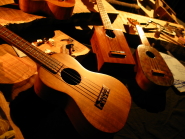
As the longtime makers of the world’s finest ukulele instrument, he never bragged about it back in the day. In fact, I don’t recall him ever saying much about his family’s iconic business. He didn’t have to, his name said it all. When I think about it, I knew about his family business before I knew him as a person. Growing up on Maui, I still remember what it took in 1977 for our family to buy a Kamaka ‘uke’. I remember us going to Long’s Drugs in Kahului to buy my older brother, Milt, his first Kamaka. At the time, it was a whopping $175! This was during the uke’s renaissance in the 1970’s, where public schools on Maui were using the instrument to provide a teaching moment to island students (as a side note, it is said that music education improves math skills). Whatever the case, all I can remember is that it was the rage (or as the kids say today, “the bomb!) back then. In recent years, the world has embraced the uke.

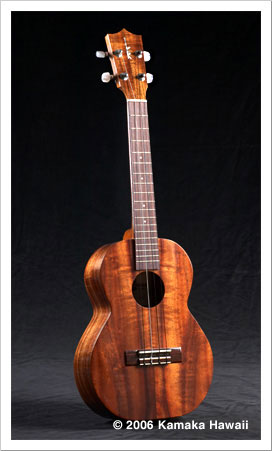
In 1993, I attended an after-work function at the Hawaiian Chamber of Commerce as a guest of one of its members, Warren Asing. When we entered the venue, we were sold raffle tickets. At the time, I was hired as an HR consultant for Fernandez Entertainment, where Warren is a highly respected Executive Vice-President in charge of the Fun Factory division. Upon showing up at their place of business the very next day, Warren approached me with a large, tenor-sized ukulele case. He explained, “after you left last night, your name was drawn in the raffle…this is yours. You won it!” While I was excited about this $1000 uke; he was ecstatic about what it was. It was gorgeous. The yellow fur-like felt that this koa gem sat-in made it look even more regal. I was perplexed: how did I win? I was fortunate but clearly, his uke stories demonstrated that he valued it beyond measure. In a split-second decision, I turned to him and said, “This is for you. Thank you for all you have done for me…” Initially, he thought I was being facetious. After he knew it was real; he explained how this fine ukulele would become an heirloom in their family; he already had a place in his Aiea Heights home set aside for it before it even got there. Knowing how meaningful it was to him made it all worthwhile for me. I made the right decision.

Like the Asing’s, Hawaii people cherish the ukulele. But more than any other, it was a Kamaka ukulele. And the Kamaka family legacy is inextricable intertwined with this musical instrument. His grandfather  apprenticed with Manuel Nunes, the Portuguese man who first introduced the instrument to the Islands. Today, Casey, his brother, Chris and his cousin, Sam, Jr. have now taken over control and run the day-to-day operations. They continue this fine manufacturing legacy of ukulele-making and other young Kamaka’s are also chipping in with the business, carrying on the tradition well into the fourth generation.

Casey’s forte is building custom pieces. As one of the last master ukulele craftsman, he focuses on the high-end, custom orders at Kamaka Hawaii, Inc. In a Honolulu Advertiser article, Casey stated, “In Tiny Tim days, it was thought of as a toy. But now as entertainers go out and share their styles people really believe it’s a musical instrument.” Case in point:He was the person responsible (or should I say “instrumental”?) in creating “the Jake,” an ukulele model for virtuoso Jake Shimabukuro.When asked recently about Casey’s prowess, Shimabukuro said, “He (Casey) put’s life into every instrument he builds…”

Here’s wishing the Kamaka ohana another century of fine ukulele-making. May they continue to be the gold standard in producing this truly Hawaiian instrument, and in bringing such beautiful island music to the world.

Hawaiian Hummingbirds and Bigfoot in Makiki

Over the weekend, Michelle and I hiked the gorgeous Makiki Valley Loop Trail, located at the Makiki Valley State Recreation Area. It’s amazing to think we were only a few miles away from Honolulu’s epicenter and the busy streets around our home on Ala Moana Blvd. We were amazed at just how many ajuma’s (aunty’s in Korean) were out on this hike, blowing us by with their face shields and neat full-tilt hiking apparel. But then again, we’re right up the road from Keeaumoku…(since my lovely wife is half-korean/half-caucasian, I’m now more aware of these cultural things…).

Anyway, as we climbed the steady uphill loop trails–Maunalaha and Kanealole (the Makiki Valley Loop Trail is actually made up of three extensive trails for a total of 2.5 miles)–we would encounter and stumble across some unreal creatures.

As the beautiful singing of the birds–from above the treetop canopy–was serenaded down on us, out of the corner of my eye I saw quick flashes of color.

I’ve seen hummingbirds before up at my grandparents place near Yosemite in California; but in Hawaii nei? Again it happened, catching glimpses of orange and brown with black and white accents. I called Michelle over in disbelief.  Then, I pointed it out to her. There it was, hovering merely for a fraction of a second before darting off to the next flower. Wow! I was stoked to see such a sight; a first for me here in Hawaii. Once I got home I needed to learn more. As it turns out, while these creatures look like miniature hummingbirds at just under an inch long, they’re actually moths (Macroglossum pyrrhosticta), appropriately given the name hummingbird moths.

In Hawaii, we do not have hummingbirds, neither native nor introduced. I learned that Hummingbird moths move so quickly from petal to petal that I had to anticipate where they were going next in order to photograph them.  They’re lightning quick, beating their wings at what must be well over a thousand times per second.

As we continued our trek around the loop, we encountered some major exposed tree roots, which coupled with the lengthy uphill sections and some very steep drop offs on multiple sections of the trail made it a bit hairy.  And of course, there are no fences or barriers, one misstep can be dangerous.

This challenging, little adventure which is just a hop, skip and jump away from Oahu’s concrete jungle left us a bit tired, but very satisfied and revitalized. After three hours of busting it, I was a spent and ready to head home. At just about that time, when we could see the finish line and were around the bend from our car, I looked to my left and couldn’t believe what I saw. In absolute disbelief, I thought I was hallucinating when I called Michelle over: Check this out!

Earlier in the day we ran into a hummingbird on this magical trail. Why not this, right? Furthermore, up until this very day, I had never heard of a Hawaiian hummingbird. Now what, a Hawaiian “Bigfoot”? (Well, the late Glen Grant’s book, “The Obake Files: Encounters in Supernatural Hawaii”, makes me rethink it. He chronicles a story from a teacher from the town of Wahiawa, where she grew up. She had heard many times the strange stories told by people who try to drive the Kaukonahua Road from Wahiawa to Waialua–the two-lane, winding road through the pineapple fields. As they drive the lonely stretch of road, they sometimes see a giant man lying on the road. This giant is named Aikanaka, she explains. The older folks of Wahiawa, she said, had many times seen this giant.)

As it turns out, sleep tight everyone, there is nothing to worry about in Makiki this day. What we were actually experiencing that afternoon was a Punahou School senior project in the works. Yes, the same school that produced our current and 44th president. Finally, I just wondered: Does their $17,800 a year high school tuition include the cost of this convincing, Hollywood-grade costume? Fun stuff!

His Fastball Is In a League of Its Own

I still remember the first (and last) time I decided to catch for Brandon League, without any protective gear. It wasn’t that I never played the position of catcher before; quite the contrary, it was my long time position. But this was a very different time. As they say, preparation is the key to life, right. Well, I wasn’t prepared on more levels than one for what I was about to see.

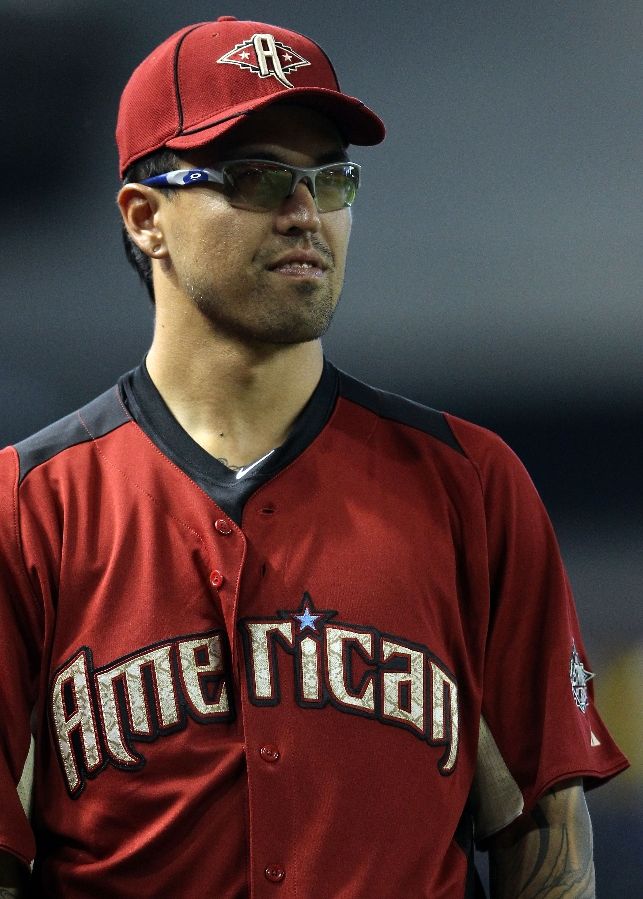
Let me preface by saying that today, Brandon League, is the starting relief pitcher for the Seattle Mariners major league baseball team. What is he known for in the MLB? Well, League is known for his down-tailing fastball that reaches a whopping 100 mph. Yup, you heard me right: 100 mph! That’s Nolan Ryan fast…

Back in the spring of 2001, when Brandon was in his senior year at St. Louis School here on Oahu, I was helping out my alma mater on the baseball diamond, assisting head coach, Vinny Passas (who was also one of my coaches when I was the captain/catcher on the 1983 Crusader baseball team). Anyway, that day back in 2001, I showed up after work, dressed in my daily work attire–aloha shirt and slacks; and NO CUP! By the way, for those less versed in baseball: The cup protects your manhood and family jewels. Much of it is in your head, but needless to say, when you’re crouched-down and 90+ mph baseballs are being hurled at you so fast they remind you of aspirins in flight, well, you get the idea…Even as a teenager he threw “smoke”. It happened when I decided to warm him up in the bullpen, at a pre-season scrimmage at Kaimuki HS. At the time, he was still in high school, but he was throwing in the mid-90’s. And the ball moved a lot, or “down-tailed”. I’ll never forget this momentary lapse of judgment. Never again without a cup. It wrecked havoc on me mentally; I don’t like that feeling of physical vulnerability. I now have learned how to say, “no”, and have learned not to volunteer for things I’m unprepared for at that given moment.

Fast forward to 2011: League is the starting “closer” for the Mariners, and this year Brandon is starting to really get noticed (to the tune of a 1-year, $2.25 million contract). Also, half way through this 2011 season, League was selected as a relief pitcher for the American League in this summertime classic, the MLB All-Star game (ASG). It was his first.

A pitcher hasn’t represented the 808 in the MLB ASG since Sid Fernandez (whom my dad predicted would go all the way to the “show” from the time Sid blew us away as a 14-year old in a game against us on Maui) did in the mid-80’s. After catching for Brandon that harrowing spring day, I felt he definitely had the goods. I’m glad he persevered and has succeeded beyond measure.

Congratulations, Brandon!

“Living Value”—The Other Side of Life Insurance

At The Wheeler Group LLC, we run across many people who, before meeting us, were simply unaware that there is any such thing as “living benefits”, or “living value” when it comes to life insurance. Rather, they think of life insurance—in its simplest form—as simply a means of securing funds to cover financial obligations, such as a mortgage, or to replace income in the event of the death of a family breadwinner. It’s no wonder that the death benefit under a life insurance policy is often its most important and most well-understood feature. But there is so much more to life insurance consumers need to know.

First of all, not all policies are the same. For starters there’s the huge difference between mutual companies and stock companies. But I’ll save that discussion for another post. With a permanent life insurance policy, there is typically a component that allows cash to accumulate, and it may be used to help supplement a number of financial objectives, such as a retirement plan or a child’s education. Because permanent life insurance may be used to supplement a savings program, it has a “living value” in addition to the traditional death benefit feature. Let’s take a closer look.

The Value of Cash Value

The cash value in this type of life insurance policy accumulates on a tax-deferred basis in the same way that money does in an Individual Retirement Account (IRA). Because of this tax-deferred accumulation, there may be some income taxes due upon withdrawal. However, you are generally only taxed on amounts that exceed the total amount of premium payments you’ve made over the course of the policy’s existence.

One of the key benefits of permanent life insurance is that you can access the accumulated cash values through policy loans without the worry of taxes or penalties. Generally, the loan interest rate is stated in the policy and is comparable to traditional lending rates. Bear in mind that access to cash values through borrowing or partial surrenders can reduce the policy’s cash value and death benefit, can increase the chance that the policy will lapse, and may result in a tax liability if the policy terminates before the death of the insured.

Another interesting aspect of a permanent life insurance policy is that, unlike a traditional IRA or another qualified plan, you may make premium payments after age 70½, and there are no rules that stipulate you must begin mandatory withdrawals of cash values by age 70½. This feature may provide you with an excellent opportunity to continue making premium payments and receiving the benefits of tax-deferred accumulation of cash values.

With a life insurance policy, there are few rules that limit the size of premium payments. Simply stated, the higher the death benefit, the higher the premium. Some forms of permanent life insurance allow you to make premium payments in addition to what was stipulated under the terms of the policy. Often, paying additional premiums may increase the cash value.

Care should be taken to avoid “overfunding” a life insurance policy, because that may lead to some adverse tax consequences. Generally speaking, however, policies are issued so they avoid this possibility altogether.

Dual Purpose Protection

Life insurance serves many purposes. Through its death benefit, life insurance aims to help protect and secure your family’s future in the event you suffer an untimely death. At the same time, life insurance with a cash value component may provide you with the opportunity to use the benefits of your policy during your lifetime. In this respect, life insurance can be a ready source of cash to help supplement an array of financial needs. A review of your current coverage may help show you how cash value life insurance can fit into your overall financial plans. Please feel free to contact Garrett Wheeler at (808)216-4147, or via email at gage@successhawaii.com.

Estate Planning and the Importance of Drafting a Will

Often, the prospect of writing a will brings up feelings of discomfort. And yet, devising a will is one of the most important factors in estate planning, one that should promote feelings of security. Doing so means that heirs will be provided for and your distribution wishes will be met. Like many people, have you postponed the task of writing a will? Or, is it time to review a will drafted years ago? A will is a formal, legal document instructing your survivors in the settlement of your estate. A qualified, experienced, legal professional can help ensure your will is properly written and contributes to the overall success of your estate plan.

Composing a will helps to ensure that you control how your estate is divided. An estate that is not covered by a will (also known as an intestate estate) will bring into effect your state’s intestacy rules. These rules govern how your estate will be divided and by whom. Some people may believe their estate is too minor to need a will, but even if you believe this is the case, you should consider writing one anyway. The reason is simple: If you die without a will, you automatically forfeit the chance to direct the dealings of your estate. In addition to facilitating bequests, a will is an opportunity for you to designate your own executor, guardians for minor children, and other fiduciaries.

If you have decided that you would like your estate to pass to personal friends or charity, a will is the primary means of fulfilling these wishes. Without a will, the courts will have no way of knowing your preferences and will seek relatives—however distant—for distribution purposes. For those who have life partners and are not married, wills are a means of helping to ensure that these loved ones will be included. In addition, a will offers the opportunity to designate a secondary beneficiary in the event of the primary beneficiary’s death.

Even those who have shifted the majority of their assets into trusts or who use joint ownership should draw up a will. While these methods are designed to bypass probate (the judicial process that establishes the validity of a will), they are not able to cover all assets. A will, however, does have the potential to cover all assets, leaving no property unaccounted for and no stone unturned.

Wills are a means of providing security to you and your loved ones. The topic may be emotionally challenging, but when the many advantages are considered, they far outweigh temporary discomfort. Careful estate planning is the best way to identify how your assets will be divided, who is to be named executor, and who will receive benefits according to your wishes. Consult a legal professional for specific guidance.

Copyright © 2011 Liberty Publishing, Inc. All Rights Reserved.

Schadenfreude or Mudita? Your Choice

The word Schadenfreude essentially means to take pleasure in the misery of others’. Naturally delighting in others’ misfortune isn’t good no matter how you slice it. But let’s face it, sometimes it is human nature; some say that we’re just human, right? Take for instance the case of Charlie Sheen. Some pay good money to see him talk (banter); others pay the same good money to boo him off stage, and display their utter distaste for his continuous, big-headed, “winning!” mockery.

As Dave Reardon from The StarAdvertiser.com here in Honolulu put it, it’s “an ugly word for an ugly characteristic.” Reardon was making a point about Hawaii high school sports dynasties and the low tolerance some people have for them, especially those they considered arrogant. His article came about from his experience covering Punahou baseball yesterday. After dominating for seven straight years, they fell hard yesterday to the delight of many. Reardon pointed out that even well-respected gentlemen were hoping they would get smashed. That they did. Mid-Pacific blew them out 8-0.

So what is the opposite of this vile word? Well, Wikipedia states: “The Buddhist concept of mudita, “sympathetic joy” or “happiness in another’s good fortune”, is cited as an example of the opposite of schadenfreude.”

There have been a number of scientific studies of schadenfreude. Some of the results say it is correlated with envy. Other research findings, according to what I read in Wikipedia, have shown that “people with low self-esteem are more likely to feel schadenfreude than are people who have high self-esteem.”

As with all in life, it comes down to choices and each one of us deciding for ourselves, Schadenfreude or Mudita?