A few days ago, Ray Dalio, founder of Bridgewater Associates (the world’s largest hedge fund) was interviewed by Charlie Rose on, “CBS This Morning”. In September 2013, Dalio put out his video entitled, “How the Economic Machine Works,” narrating and explaining how he thinks the economy works. Dalio is personally worth over $10 billion; so to say he understands the economy is a gross understatement. When asked by Rose to summarize the video, Dalio said: “It’s in 30 minutes a description of how I believe the economic machine works, in other words I believe the economy works like a machine. I believe most things work like a machine. I’m a market participant. I’m a global macro-economic investor. And so it’s from–I think—a very practical perspective.”
Stunned, Rose went on to ask Dalio, “Some would say the following. ‘If I had made billions of dollars, because I had a unique understanding of the way the economy works, I’m going to keep it to myself’.” To that Dalio replied, “Well, that’s why I say when I’m 64 years old. I’m going to — you know, in the stage of my life where I think this is valuable. I think that people take 30 minutes, watch it, and understand it.”
Over the years, I have watched, and been a follower of Dalio’s work. He runs his renowned firm on a distinct set of transferable principles, which encourage extreme transparency, and at it’s core, requires one to challenge their beliefs. I learned of his operating doctrines a while back after reading his 123-page treatise he put out in 2011 simply called, “Principles by Ray Dalio”. Is it a little ego driven? Sure, of course, would do you expect? But make no mistake about it, Dalio’s views are well-respected for good reason. Aside from running the world’s largest hedge fund, he has a tremendous track record. And like E. F. Hutton in the 1970s and 80s, today, “When Dalio talks, people listen”.
I recently read an interesting article in an industry publication. Its purpose was to serve as a reminder for those of us who are in the financial services profession. It said that we need to truly believe in what we’re doing as professionals—that is, doing good in the world by serving our clients.
The article went on and stated that it’s too bad we can’t all read our obituaries and determine how other people view our life. There is at least one exception to this and that is Alfred Nobel.
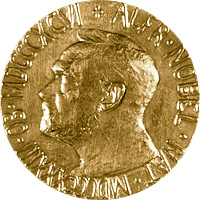
Nobel was the wealthy Swedish businessman who established the Nobel Prize. He had invented dynamite and became one of the world’s largest producers of explosives. When his brother died in a test of explosives, a newspaper mistakenly printed Alfred’s obituary instead of his brother’s. It read:
“The Merchant of Death is dead . . . Dr. Alfred Nobel, who became rich by finding ways to kill more people faster than ever before, died yesterday.”
When Alfred read it and saw that his life amounted to so much destruction and killing, he was devastated. He decided to do something to benefit humanity, and he used his fortune to establish the Nobel Prize for people who do good in the world. Do you believe in the value of what you do?
A colleague of mine, Gregory Gassert, who is in our Minneapolis affiliate at Guardian Wealth Strategies, was recently featured in a WSJ article entitled, States You Shouldn’t Be Caught Dead In. In this piece, Hawaii is featured as one of two states that track the U.S.’s $5 million-plus exemption. However, as Gassert shares, “most state exemptions aren’t indexed for inflation, extending the tax’s reach over time.”
So what can be done to minimize or avoid potential problems? As with most financial planning issues, experts say, “careful planning is required to avoid traps—especially for taxpayers who move to another state.” And to be clear, there are a host of strategies to mitigate federal and/or state estate taxes. For one, consider section 529 of the Internal Revenue Code which provides for an often overlooked estate planning vehicle designed to protect assets away from estate taxes over multiple generations and can act like an education endowment. For more applicable details as it relates to your situation, you will want to have a more in-depth discussion with your estate planning attorney or CPA. http://online.wsj.com/news/articles/SB10001424052702304682504579155510034634716
Many limitations and thresholds which are related to taxation change from year to year; some do not. From Estate, Gift, and Generation-Skipping Transfer (GST) Taxes, to Qualified Retirement Plan Limits, and Income Tax Rates, as well as Tax Exemptions, Standard Deductions and more. Below is a listing of the 2014 numbers for some key tax matters. Hope it can help you to be better prepared. 2014 Tax Data You Should Know
As always: The foregoing information regarding estate, charitable and/or business planning techniques is not intended to be tax, legal or investment advice and is provided for general educational purposes only. We do not provide tax or legal advice. You should consult with your tax and legal advisor regarding your individual situation.
Consider my clients who are friendly neighbors of mine at Yacht Harbor Towers in Honolulu. After sitting down together and reviewing their unique personal situation, they bought long-term care insurance (LTCi) policies that would help pay what was then the going rate for this type of care here in the islands. But, to be sure, it wasn’t a “snap” decision. It never is with LTCi. Every LTCi client I deal with, no matter how wealthy they may happen to be, always wants to know, “what will it cost us?”, “what if we never use it?”, etc.
[Hopefully after viewing the featured, “Vernon Duckett – Peace of Mind for the Long Term” video, viewers will have a paradigm shift and their focus will be on the unequivocal, vast potential benefits.]
Long story short, this fine couple started with me in 2009 with a $250 daily benefit and a four-year benefit period with 5% simple inflation (vs. preferred “compound” inflation variable which I advise), which means the benefits increase at 5% of the original amount each year until they double in 20 years (he’ll be 83, she 82). Their daily benefit would have been growing at $12.50 each year so their benefit pool is now worth $425 x four years = $730,000. She and her husband bought the same policy so together they have $1.4 million in benefits. There is a 30-day elimination period so they are responsible for the first 30 days in charges.
He and his wife were 62 and 63 when they bought their policies in 2009, and their combined premium is $5,828 annually. They have now paid about $30,000 in premium for the $1.4 million in benefits in 20 years. If one of them had a claim today and used the entire daily benefit of $312.50, they would get their entire premium back in less than four months. A measly four (4) months! On top of that, the premium would stop for the one on who is on claim.
So what do you think? Does LTCi make sound economic sense? You Decide: It’s Your Life. But in my professional estimation, LTCi doesn’t just make good economic sense, it is actually a BARGAIN. So did my neighbors make a good economic decision? I definitely think so.
Amazing how there’s entire websites devoted to the elusive concept of, “happiness”. At Successories, one of our bestsellers was an Abraham Lincoln quote which for me personally has always summed it up succinctly:
“People are just as happy as they make up their minds to be.”
“Finish each day and be done with it. You have done what you could. Some blunders and absurdities no doubt crept in; forget them as soon as you can. Tomorrow is a new day. You shall begin it serenely and with too high a spirit to be encumbered with your old nonsense.”
Growing up we all learned about Theodore “T.R.” Roosevelt, Jr. fighting as a “Rough Rider” in the Spanish-American War. But I was clueless to his true character. Of course, he was highly educated (Harvard) and well read, but more than that, he was a hard-nosed, rugged man’s man and tough as nails. The more I read about our 26th American President, the more I respected this great man and the admirable life he lead. He was much more than I had ever imagined.
First of all, as an example, let’s talk about my favorite motivational topic—perseverance. TR truly exemplified it. He did not achieve great political success from day one. In fact, in 1886, TR ran as the Republican candidate for mayor of New York City; he came in third. But he pushed on, persevered and ultimately became commander-in-chief.
While TR was campaigning in 1912—in a lost race—a Wisconsin saloonkeeper shot him. But the bullet was lodged in his rib cage after being slowed by his steel eyeglass case and thick, 50-page speech he was carrying(see adjacent images). Instead of going to the hospital immediately, instead he chose to deliver his planned speech with blood still dripping from his shirt. He went on to speak for 1½ hours. His told the crowd of 10,000: “Ladies and gentlemen, I don’t know whether you fully understand that I have just been shot; but it takes more than that to kill a Bull Moose.”
To be clear, Col. Theodore “Teddy” Roosevelt walked the talk, and definitely personified and lived the values he espoused. Finally, I’ll leave you with what I believe to be the most notable portion of this great President’s speech, “The Man in the Arena.”
It is not the critic who counts; not the man who points out how the strong man stumbles, or where the doer of deeds could have done them better. The credit belongs to the man who is actually in the arena, whose face is marred by dust and sweat and blood; who strives valiantly; who errs, who comes short again and again, because there is no effort without error and shortcoming; but who does actually strive to do the deeds; who knows great enthusiasms, the great devotions; who spends himself in a worthy cause; who at the best knows in the end the triumph of high achievement, and who at the worst, if he fails, at least fails while daring greatly, so that his place shall never be with those cold and timid souls who neither know victory nor defeat.
My friend and Successories® founder, Mac Anderson, once said, “The right words can engage the brain and bring an idea to life.” Mac loves quotes and I do too. Here’s the way I see it: One day a specific inspirational quote may do nothing for you and have absolutely no meaning. Then strangely enough, the very next day—because of whatever you may have experienced in your life—it suddenly hits you squarely in an “AHA”-type moment, making the message a meaningful revelation. After being surrounded by so many wonderful quotes and inspiring messages for more than a decade at Successories of Hawaii, it’s difficult to narrow down, but here’s twenty-one I’d like to share:
Whatever the mind of man can conceive and believe, it can achieve. –Napoleon Hill
Strive not to be a success, but rather to be of value. –Albert Einstein
You miss 100% of the shots you don’t take. –Wayne Gretzky
We become what we think about. –Earl Nightingale
Life is 10% what happens to me and 90% of how I react to it. –John Maxwell
Winning isn’t everything, but wanting to win is. –Vince Lombardi
I’ve learned that people will forget what you said, people will forget what you did, but people will never forget how you made them feel. –Maya Angelou
People often say that motivation doesn’t last. Well, neither does bathing. That’s why we recommend it daily. –Zig Ziglar
Successful people are always looking for opportunities to help others. Unsuccessful people are always asking, “What’s in it for me?” – Brian Tracy
Happiness is not something readymade. It comes from your own actions. –Dalai Lama
In order to succeed, your desire for success should be greater than your fear of failure. –Bill Cosby
12. Baseball is the ideal forum for teaching the art of failure; the very best fail to get a hit seven out of ten times. — Sam Dunn
Our lives begin to end the day we become silent about things that matter. –Martin Luther King Jr.
Do what you can, where you are, with what you have. –Teddy Roosevelt
The question isn’t who is going to let me; it’s who is going to stop me. –Ayn Rand
You can’t be grace if you’ve only had wonderful things happen to you. (Mary Tyler Moore)
It’s not the years in your life that count. It’s the life in your years. –Abraham Lincoln
Change your thoughts and you change your world. –Norman Vincent Peale
Nothing is impossible, the word itself says, “I’m possible!” –Audrey Hepburn
The only way to do great work is to love what you do. –Steve Jobs
It is through the way you serve others that your greatness will be felt. –Dr. Linda Andrade Wheeler
In the latest issue of Forbes, Contributor David K. Williams, he talks about his new book,The 7 Non-Negotiables of Winning. I latched onto to it thinking others’ would appreciate it, as well. Here’s what Williams had to say: “I’ve talked a lot about winning—but I’ve talked a lot about failing, too. Learning how to fail productively—to “Fail Up”—is one of the greatest secrets to full-on success. And in that vein, I was impressed with a recent article by business author Bernard Marr. He pointed out that there is one single thing that all “radically successful” people have in common: They have a ferocious drive and hunger for success that makes them never give up. There are many varieties of success. Jobs and careers are one area, but success in family life, personal relationships, community and church work, philanthropy and sports or treasured hobbies are important success priorities as well.
One thing is certain: There is no clear and definitive path to success for anyone. The most successful people in any endeavor will tell you many stories of failure within their life journeys. Many (if not all) have experienced major failures, multiple times. But they never gave up.
As I have said many times, the greatest secret to success is learning how to “Fail Up.” It would even be fair to say that failure is the driver that makes truly successful people even more hungry and determined to achieve their success.
1.Henry Ford stands tall as a pioneer of modern business, yet this founder of the Ford Motor Company failed many times on his route to success. His first business attempt at building a motor car was shuttered after just a year and a half when stockholders lost confidence in his ability to succeed. He gathered more cash and re-started his effort, but a year later was forced out of his own company yet again. The entire motor industry had lost faith in Henry Ford, but he was not deterred. He found another investor to start the Ford Motor Company, and the rest is history.
2. Walt DisneyDIS +0.73% – The creator of the global Disney empire of film studios, theme parks, and consumer merchandise travelled a long and winding road to success. Amazingly, Walt Disney was fired from an early job at the Kansas City Star Newspaper because he was “not creative enough.” In 1922 he launched a Kansas-based company called Laugh-O-Gram with a mission to produce cartoons and short advertising films. One year later, in 1923, the business went broke. He didn’t give up, though. He moved from Kansas to Hollywood to begin another venture, and The Walt Disney Company was born.
3. Richard Branson – A personal favorite of mine, Richard Branson is a highly successful entrepreneur. In fact, in a prior article, I named him one of the Top 10 Living Business Leaders Today. Branson’s successful ventures include Virgin Atlantic, Virgin Music, and Virgin Active. At age 16, however, Branson was a high school drop out with hopes of starting a student magazine. It didn’t succeed. He went on to establish a mail-order record business that did so well it led to the creation of the record shop he called Virgin. Today we know him as one of the world’s greatest entrepreneurs, but on his path to success he endured many more failures, including Virgin Cola, Virgin Vodka, Virgin Clothes, Virgin Vie, and Virgin Cards. Thank heavens he never gave up.
4.Oprah Winfrey has just returned to the No. 1 position on the Forbes celebrity list after two years in second place and a drop in income of $88 million since last year. She is broadly acclaimed as the queen of entertainment, and has enjoyed an amazing career as a talk show host, media proprietor, actress, and producer. However, Oprah began her life in poverty, and in her earlier career she endured numerous setbacks, such as getting fired from her job as a reporter because she was ”unfit for television,” and fired as the co-anchor of weekday news on WJZ-TV, which resulted in her being demoted to morning TV. Clearly those organizations didn’t recognize the incredible talent they were squandering.
5.J.K. Rowling – The iconic writer of the Harry Potter series, which has resulted in the sale of more than 400 million books, is also responsible for the most successful and lucrative book-based film series in history. However, early in her career as an author, Rowling received endless rejections from publishers. Even her famous Harry Potter manuscript was rejected outright for reasons, such as, ”It is far too long for a children’s book” or, ”Children books never make any money.” Her story is even more inspiring when you realize that she was a divorced single mother who was living on welfare when her career as a writer began.
6. Bill Gates –The famous co-founder and chairman of Microsoft dropped out of Harvard to set up a business called Traf-O-Data. The partnership between Bill Gates, Paul Allen, and Paul Gilbert was based on a good idea to read data from roadway traffic counters and create automated reports on traffic flows. But the business model was flawed and the company had few customers and resulted in losses from 1974 to 1980 before it was closed. But Bill and his partner Paul Allen put the lessons they’d learned to good use when they created Microsoft.
7. Milton Hershey failed in his first two attempts to set up a confectionary business. But is there any of us who doesn’t know and love Hershey confections and chocolate today?
8. H.J. Heinz began his career with a company that produced horseradish. It went bankrupt. Thankfully, he was persistent and he had some other ideas in mind. His food products left his competitors far behind trying to catch up.
9. Steve Jobs was fired from Apple, joining a long list of brilliant leaders who have been removed from the companies they founded. He returned several years later to turn Apple into one of the most successful technology and consumer organizations in the world.
Thanks again to Bernard Marr for this inspiring compilation. And I’m sure many of you could add a few more names, both famous and unknown, to the list. All of them share the same successful characteristic: They never gave up, no matter how many times they had to get back up and dust themselves off before they could fully succeed. What about you?
Are you active-duty military, based in Hawaii? If you are, you got to check the monthly MWR Newcomer’s luncheon held at Hickam AFB. You’ll learn a lot and get a fine meal as well. Aloha! GW




 SEA Financial Hawaii