
Category: Uncategorized
Launching SEA Video Series
Serving kamaʻāina since 2001. Unbiased, objective financial education. As a guiding principle, we focus on two things: what truly matters to you and what you can control.

- In this series, we’ll focus on evergreen topics, meaning we want them to stay relevant for years. No faddish stuff. Always offering real value that doesn’t expire with market fluctuations. This type of content is only to educate and inspire potential clients to take action and solidify their financial plan and investment strategy.
- We’ll keep most of our videos short and concise—ideally under 3 minutes—to help our viewers and not bore them to tears.
Viewers will find a wide variety of videos covering the expected topics like portfolio management, insurance strategies and estate planning, as well as the unexpected and unique. My goal is to offer up real world solutions and effective strategies—not just good ideas–from my over two decades of industry experience. If you’d like to learn more about investing for retirement, protecting yourself from life’s uncertainties, running a small business, planning for longevity, or simply getting a clearer understanding of estate planning, you’re in the right place.
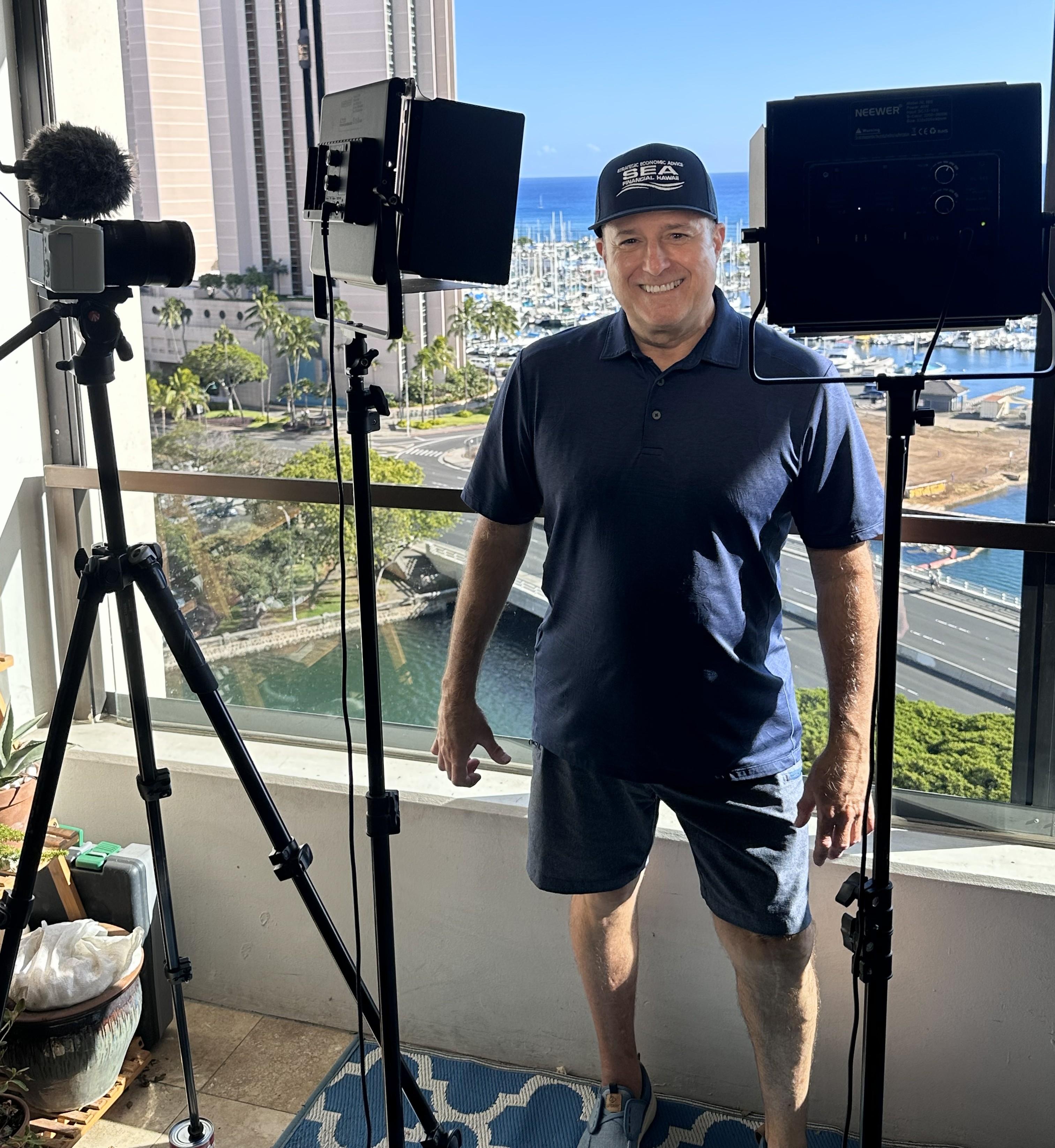
Stay tuned and don’t forget to subscribe. E komo mai—welcome. Glad to have you here, aloha! For full disclosures please see our website at https://www.seafinancialhawaii.com/

Give the Gift of a Lifetime
It’s RMD Time: It Ain’t 70 1/2 Anymore!

In 2020, President Trump signed the SECURE Act (Setting Every Community Up For Retirement Enhancement) into law as part of a far reaching “Further Consolidated Appropriations Act of 2020”. Although the SECURE Act was only signed into law about a year ago (December 2022), it’s mandates are already impacting U.S. small businesses and their employees alike.
What are RMDs (Required Minimum Distributions)?
The first word in this acronym stands out and is key: Required. Required Minimum Distributions (RMDs) are minimum amounts that IRA and retirement plan account owners generally must withdraw annually. The first RMD must be taken by April 1st of the year following your 73rd birthday. Let me explain let’s say you turn 73 years old on August 1, 2023. In this case, your initial RMD would be start by April 1st, 2024. In other words, your first RMD must be taken by April 1st of the year after you turn 73. As a side note, if you were born after 1960, then beginning in the year 2033, the SECURE 2.0 will extend the age at which RMDs must start to 75 years old. There are a lot of moving parts. But as you can see above, the schematic by Michael Kitces, explains the RMD details much better than just words alone.
There are a lot of detail to RMD planning. As an example, retirement plan account owners (like traditional IRAs) can put off taking their RMDs until the year in which they retire (unless they own 5%+ of the business underwriting the plan). Just know this, if you choose to delay taking your RMD, you’ll need to combine your RMDs (first and second) in the same year. That may create a problem by pushing you into a higher tax bracket. Talk to your trusted tax advisor to ensure you are following the guidelines and deadlines! Because, as with all things government-mandated, if you miss your RMD deadline, the penalties can be severe. Here are the IRS guidelines.
A Reduced Penalty. Wait, What?
Yes, you read correctly. In the past, it was widely known in the planning community that RMD penalties were heavy. How steep? Well, under the prior rules, if a retiree overlooked or just flat-out missed the RMD deadline, they would be hit with a painful penalty of 50% of the amount not taken on time. Today, presently, that penalty has thankfully been reduced to 25%. And lessor yet, 10%, if you correct the oversight within two years.
By the way, even if you inherit a qualified (IRA, etc.) retirement account, it is still subject to an RMD. Note: Roth IRAs escape the RMD requirement in the account (IRA, etc.) owner’s lifetime, but get this: Your heirs will have to take RMDs). Nevertheless, overall, I like the changes and updates to RMDs. It allows hardworking Americans to keep their hard-earned money in retirement accounts for a longer period of time to earn more money for their future. And given the fact that we are all living longer, this can only help. -GW
At SEA Financial Hawaii, we do not provide tax, accounting, or legal advice. Clients should consult their own independent advisors as to any tax, accounting, or legal statements made herein. This material is being provided for informational or educational purposes only and does not take into account the investment objectives or financial situation of any client or prospective clients.
Heads up, Military Servicemembers and Federal Employees! What You Need to Know about the Thrift Savings Plan
For the past twenty-two years I’ve worked with clients who have a wide variety of workplace retirement accounts. From 401(k) to 403(b), including the Thrift Savings Plan (TSP). All of these programs vary in terms of their investment offerings, fees, and other characteristics. But the largest employer in the country–the U.S. government–has the TSP. It is the Federal government’s own ‘defined contribution’ plan. Both civilian Federal government employees (i.e. GS-types) as well as military servicemembers have access to the TSP. In fact, even our U.S. military veterans, can choose to keep their TSP accounts. One caveat: Veterans can no longer make contributions. But there are a multitude of things we can do to remedy that issue.
As a whole, all workplace-defined contribution plans are pretty similar in their features (i.e., many today offer Roth options, as well as, employer matches). However, the one big thing that makes the TSP unique is that it has lower fees compared to private-sector plans. This is a good thing. Another unique feature is that it has a fixed-income investment option, which is exclusive to the TSP.
Last year (2022), the Thrift Savings Plan saw some major changes, including the opening of a “Mutual Fund Window”. This is another positive, I believe. What it does is it supplements the previously very limited TSP offering of investment funds. One additional thing to note: Participants need to know that the associated expenses make it quite pricey. Another techy update to the TSP was the introduction of a smartphone app. This is cool, but it requires some time to implement. I know this because I recently helped a longtime client (a ‘nuke’ from Navy/Pearl Harbor who moved to New Jersey) navigate these new changes. He had to decide if investing through the Mutual Fund Window made sense for him; it did. We had to go through an entire re-registration process for the new site via the mobile app to ensure his critical information (i.e. beneficiary information) got transferred correctly.
It only makes sense that the majority of my military clients transition into new “encore” careers. They’re still quite young in comparision to the traditional, civilian retirement age here in the U.S. of age 60+. One thing I always emphasize is the need to compare and contrast what they have (TSP) versus what is now available to them (i.e. 401k, etc.). We always start by looking at balancing their new cash flow–what the can afford to sock aside–especially during their transition period.
As for my clients who are still on active duty, it requires an annual review like many of my civilian clients. What’s different about my valued military guys is this: they deploy. And when they deploy to combat zones, there are benefits, as well as related TSP considerations to be aware of. For one, their income earned while deployed in a combat zone is tax-free. This is a good thing, for sure. But we need to keep an eye on woefully blending or commingling this tax-free combat pay with taxable earnings. This messes things up. But we can work to prevent this by planning for it. From the get-go, I implore my military (and civilian) clients to communicate and keep me posted on recent changes, like going on deployments. We can avoid issues by making Roth contributions during periods where income is not taxed. Another point worth noting during a period of combat deployment is that the annual deferral limit increases quite drastically. Again, a good thing. This is an opportunity for them to contribute even more money to the TSP. Of course, it all boils down to cash flow. And very much like their civilian counterparts, I find that every single military client has a unique set of circumstances.
The bottom line is that the TSP is very similar to the other workplace retirement plans, such as the 401(k). However, Federal employees and especially, our hard-fighting military servicemembers have a very different job–they serve our country! For this primary reason, it is my mission to give back and serve their families.
What is an RIA, anyway?
An RIA is a registered investment adviser. Is that a stockbroker? No. Here’s an objective, succinct piece from TD Ameritrade. It explains the stark differences between an RIA and other financial planners and registered reps from broker-dealers. As I shared in my New Year’s article (December 28, 2022), you would think that all financial advisors are legally obligated to act in the best interests of their clients, right? Surprisingly, the answer is no. Only fiduciary financial advisors are required to act in the best interests of their clients. I’m still blown away by that, and clients of investment salespeople should be too.
Benefits of Working with an RIA (TD Ameritrade)
RIA’s are fiduciaries. It is what sets them apart professionally. That word, fiduciary, means a lot. It is an odd word, but arguably the most important word in financial planning and wealth management. It originates from the Latin word, fidere (“to trust”). But as I pointed out previously, it is much more than just a word. It is a service mindset. Serving others’. As fiduciary financial advisors (vs. commission-based agents), we are legally obligated to act in your best interest when helping you make decisions about your money. Do yourself a favor, work with a fiduciary.
Legal disclaimer
The content on this page provides general consumer information. It is not legal advice or regulatory guidance. The TWG LLC updates this information periodically. This information may include links or references to third-party resources or content. We do not endorse the third-party or guarantee the accuracy of this third-party information. There may be other resources that also serve your needs. Aloha!
Fight Inflation by Hedging Your Retirement Portfolio
The Seesaw Effect of Stocks & Bonds and Yield & Price
With the stock market struggling to break out of this down market, and with bearish experts saying a recession is looming, some clients are seeking fixed income. As investors, we’ve all heard the idiom, stocks & bonds, right? Basic diversification. Remember the seesaw effect: When yields rise, prices fall. Supposedly, the idea is when one goes up, the other goes down, like a seesaw. So, what happened in 2022, when both markets were down? Short answer: Inflation. A fundamental principle of bond investing is that market interest rates and bond prices generally move in opposite directions. When market interest rates rise, prices of fixed-rate bonds fall. This is interest rate risk. Misconception that if a bond is a US Gov’t obligation, the bond will not lose value. In fact, the US Gov’t does not guarantee the market value of a bond if you sell the bond before it matures. But, yes, it is complicated. Check out this PBS special.
https://www.pbs.org/newshour/show/how-interest-rate-hikes-impact-bonds-and-stock-prices
It’s a bit early to state with certainty that the bear market is over for U.S. stocks (look at what happened just yesterday—1/30/23). With a plethora of issues like record inflation, rising interest rates, the ongoing Ukraine war, along with pending profit downgrades, and added tensions with China, we’re in a tough spot as a world economy. And on top of that, there are some forecasters pegging the probability of a recession at 60%+. However, anecdotally, most investors I’ve talked to have moved on from their dire inflation concerns. But the macroeconomic picture is far from being completely rosy. As a result, more and more investors are hedging by increasing their exposure to safer havens like, U.S. Treasuries, Munis and investment-grade bonds. Amidst the turmoil, these investors are just trying to ride it out, staying patient and in the meantime, collecting some income. In my opinion, not a bad idea. But of course, it all depends on where you stand. If you’re getting closer to retirement, you might want to discuss with your financial advisor an allocation shift to hold some of your retirement monies in a traditional savings or money market account. The good news is that interest rates are up. As a result, you’ll be earning more in interest now than you would have over the last several years.
Make no mistake about it, this inflation thing is real. I recently went to Zippy’s here in Honolulu and simple food for the soul, Oxtail Soup, is $28! I was floored, but still ordered it. Inflation is everywhere and impacts everything we buy. But it is nothing new. I still remember the impact inflationary pressures had on us as a kid growing up on the island of Maui in the mid-seventies. At the time, gas prices were soaring, and supply levels were diving. OPEC decisions made us wait in our cars in long lines for hours at a time just to get fuel for our cars. But we survived and just like we did, keiki today will reflect on what it was like to live in 2022 with the worst inflation to hit our U.S. economy in 40 years. Hopefully inflation has peaked in 2022. For more clarity, many of us are waiting for the Federal Reserve to speak up. Up to this point, Powell & Co. has remained committed to their campaign of interest rate hikes. In fact, it has been the most aggressive since the Carter and Reagan administrations. For now, we’ll see what happens tomorrow when Jay Powell talks to the world. My advice: Take it in stride, one step at a time…gw
2023 TAX SEASON REMINDERS
2023 TRADITIONAL IRA AND ROTH IRA ESTABLISHMENT DATES
The deadline for establishing a Traditional IRA or a Roth IRA in order to make a 2022 contribution is Tuesday, April 18, 2023. All applications must be signed and submitted (including e-signature applications) to Advisor Services in good order by Tuesday, April 18, 2023.
IRA CONTRIBUTION DEADLINE FOR TRADITIONAL IRA AND ROTH IRA ACCOUNTS
The contribution funding deadline for Traditional IRA and Roth IRA Accounts is Tuesday, April 18, 2023, regardless of whether the client has filed an extension with the Internal Revenue Service (IRS) to file their tax return.
It is very important that IRA contribution checks and deposit manifest clearly indicate the contribution year as 2022 or 2023. Per IRS regulations, if a tax year is not indicated, the contribution will be coded and processed as a current year contribution. In order to adjust 2023 contributions to 2022, a letter of instruction is required from the client no later than Tuesday, April 18, 2023.
“RMD Time”—Required Minimum Distributions (RMD)
Of course, clients’ The Wheeler Group LLC can reach out to us with any specific RMD questions. Since it is highly dependent on your unique situation (i.e. age, holdings, etc.) you need to reach out to your personal financial advisor. Here are some general RMD points of discussion:
- For clients who attained the age of 72 in 2022 and are taking advantage of the April 1st, 2023, extension please see below to determine applicable deadline regarding Required Minimum Distribution (RMD). Note: Any requests to sell mutual funds, stocks, or bonds in order to make an RMD must be received by Advisor Services prior to the dates noted below to allow for trade settlement and processing.
| Year client reached the age of 72 | RMD MUST be made by: | Investments must be sold by: |
| 2022 | Friday, March 31, 2023 | Wednesday March 29, 2023 |
- Clients are subject to a 50% federal excise tax on any percentage of an RMD not taken by the required deadline.
As fiduciaries, we are here to help our clients. However, when it comes to tax advice and preparation, you need to contact your CPA, or accountantcy provider. At The Wheeler Group LLC, we DO NOT PROVIDE TAX ADVICE. We are trusted financial advisors and as such, we are here as a financial resource to provide valuable information and keep you on track. At the same time, never hesitate to reach out and contact us. Here’s to a healthy, prosperous 2023 to you all. Aloha!
A New Word for the New Year
Recently, I had a client ask me, “hey, Garrett, are you a fiduciary?” Yes, I am, I told her. And thanks for asking, I replied. I worked hard to earn that right to answer in the affirmative. The fact is that every client should ask their potential advisor the very same question. Yes, it is an odd word, but arguably the most important word in financial planning and wealth management. Unfortunately, few people are familiar with what it truly means. It originates from the Latin word, fidere (“to trust”). But it is so much more than just a word. As fiduciary financial advisors (vs. commission-based agents), we are legally obligated to act in your best interest when helping you make decisions about your money. This is a huge differentiator.
One would think that all financial advisors would be obligated to do this, act in the best interests of their clients. However, less than 15% of financial advisors are fiduciaries, yet the majority of consumers think that EVERY financial advisor is a fiduciary. To be clear, only financial advisors who are fiduciaries are required to act in the best interests of their clients. Scary, right? For this reason, I want to share three reasons why you need to have a fiduciary financial advisor in your corner—no matter your stage in life.
- Objectivity: When making choices about your retirement savings, assets, investments, or anything else, a fiduciary will look objectively at your financial picture.
- Disclosure of Conflicts of Interest: A conflict of interest is when someone is in a position to make a decision based on an ulterior motive. Fiduciaries are required to disclose and avoid conflicts of interest.
- Scope of Financial Concerns: As fiduciaries, we are here for you when it comes to any and all questions you may have about your money. Whether it’s a one-and-done meeting or a nurturing a long-term relationship, you can come to us.
I hope these three considerations have armed you with the knowledge to vet potential financial advisors. If you are looking for a fiduciary, or if your current advisor only provides a suitability standard of care, we would love to connect with you. Please reach out to us for an introductory conversation. And, as always, our initial advisory session is without cost or obligation to you. We’re on your side. Our goal is simple, to focus on what best meets your objectives.
Together, let’s make 2023 a year to remember.
Ideas without action are worthless. —Harvey Mackay
Hau ‘oli Makahiki Hou! Happy New Year!
Legal disclaimer
The content on this page provides general consumer information. It is not legal advice or regulatory guidance. The TWG updates this information periodically. This information may include links or references to third-party resources or content. We do not endorse the third-party or guarantee the accuracy of this third-party information. There may be other resources that also serve your needs. Aloha!
Retiree Regrets and Mistakes to Learn From and Avoid
“It’s good to learn from your mistakes. It is better to learn from other people’s mistakes.” — Warren Buffett
I recently watched a CBS Morning news segment entitled, ‘What would you tell your younger self?’ Great segway into planning for a long retirement, God willing, right? Stats say that many retirees are not happy with the way they prepared for retirement. The way I see it, today’s workers can learn from these regrets and avoid them by creating a retirement plan and sticking to it. Yep, I know, easier said than done.
Planning for retirement can seem confusing and complicated, so it’s not surprising that two-thirds of retirees say they have regrets about how they prepared for it, according to a recent survey. More worrisome is the fact that many of today’s workers continue to do the same things the retirees wish they had not. So, I suggest to younger people that they learn what can go wrong in retirement NOW, to avoid it later in life. Same old story: If I only knew what I know now, right? Anyway. Life is unpredictable. Help yourself. Do what you can to plan for a long life.
After 22 years of helping people with planning for a rewarding retirement, I hear a lot of the same things repeated from retirees about what they would have done differently. Many preretirees ask themselves questions like, ‘Have I saved enough money to retire?,’ or ‘Will I be able to maintain the standard of living I’ve grown accustomed to?’. Financial planners cite three retirement phases: Go-Go, Slow-Go and No-Go. In the Go-Go years, typically 65 to 75, healthy young retirees spend a lot on travel, hobbies, and scratching life-long dreams off their bucket list. Retirees are less active between 76 and 85 in the Slow-Go years and tend to spend their No-Go years of 86 to 100 quietly. More than more than half (55 percent) of retirees said they have retirement planning regrets. The Washington Post ran an article entitled, “The top regrets of retirees” (https://www.washingtonpost.com/business/2018/12/10/top-regrets-retirees/). Citing a Global Atlantic survey (2018 survey of 4,200 pre-retirees and retirees in the United States), here are three (3) regrets of retirees:
1. Being too reliant on Social Security.
2. They did not pay down debt before retiring.
3. They didn’t save enough.
See the article for more details. One point it made was that thirty-nine percent (39%) of retirees reported spending more than they expected. And consistent universally in the financial planning world, the article reiterated, “The risk of running out of money is real.” When you get right down it, why waste your energy mourning the past? Move on. You can’t change the past. And if you do have regrets, well, avoid spending too much time in what my mother (author, Dr. Linda Wheeler, https://www.drlindawheeler.com/) calls, ‘the tunnel of suffering.’ She tells audiences, ‘Don’t grow roots there…work to get out!’ So, the point is, adapt and take a page from the late poet and author Maya Angelou’s playbook. Angelou said, “Do the best you can until you know better. Then when you know better, do better.” What else is there, right?
Another idea is to focus on what really matters. At 88, Clint Eastwood was asked, “How do you remain so young and active?” The now 92 y.o. Clint replied, “I don’t let the old man in.” Yep, tough mindset for sure. Some fight the frailty aspect of aging. Others just give in, saying c’est la vie. All I know is that life is unpredictable. In my practice, we discuss risks in retirement. Longevity happens to be one of them. Optimists will comment, what is wrong with living a long life? Nada. It is about addressing the risks if you choose. My partners at St. Francis Healthcare are sponsoring a FREE virtual LTCi educ session I am conducting tomorrow evening via Zoom. Join us. Here is the link to register: https://www.stfrancishawaii.org/s/courses

Heard of FTX? Celebs Sued in $1 Billion Ponzi Scheme
By now you have heard about the implosion of FTX. Among others, the Brady’s, Shaquille O’Neal, Steph Curry, David Ortiz, Shohei Ohtani and Naomi Osaka. Even “Mr. Wonderful”, Kevin O’Leary is apparently named in the lawsuit. The suit said FTX needed these big names, “to continue funneling investors into the FTX Ponzi scheme…” It also said their “misrepresentations and omissions” make them liable after FTX’s downfall.
So, what does FTX do? We all know the term cryptocurrency. It is ubiquitous. Let’s face it, “Crypto” is part of our vernacular today, but what is it? That’s the problem, we don’t know what it is. It’s crazy. I learned that there are over 17,000 different types of cryptocurrencies. Yup, 17k. Get this, it’s become so acceptable as ‘currency’ today that some professional stud athletes are requesting that their salaries be paid in Bitcoin. Scary, but true. We all have a choice. It’s your decision.
Many equate FTX with Bitcoin, as being one in the same. Two of a kind. They’re two very different things. With equities, that’s like saying Apple stock is the same as Revlon stock. Very different, one is very profitable (and some say, overvalued), whereas the other is bankrupt. The crypto understanding gap is huge; we need accurate information. Understanding what it is, and what it is not crucial.
A WSJ article (11/17/22) spells it out. Entitled, “New CEO Says FTX Suffered ‘Complete Failure of Corporate Controls”.
Closer to home, here’s a question I get from well-intentioned clients: ‘Hey G, should crypto be a part of my investment portfolio?’ My boilerplate response, ‘it depends’. My response is often twofold: Number one, do your due diligence (your homework) based on your risk tolerance (crypto is not for the frail at heart). Secondly, why do you have an interest in crypto? Of course, like all investing, most blurt out: ‘to make money’. But is it worth the immense risk? To be sure, there’s a lot of equities and securities out there that are equally risk oriented. But why crypto? Because it’s exciting and relatively new? I get it. But please do your research.

Despite the long-term unknown, I actually believe that cryptocurrencies will be around in the future. At least some iteration of it. In what form exactly? Who knows? One thing I do know is it remains an emerging asset class. And if you’re going to invest serious money (‘serious’ is relative to you), you need to triple-down on your research. Go deep and study. It’s your money. I’ve said it repeatedly vis-à-vis investments—caveat emptor (buyer beware). We live in the age of scams and scammers. Protect yourself or just don’t play the game. It is zero-sum. It’s just too easy to fall prey to these rip-off artists with their slick, manipulative marketing. Research. Take your time. And I implore you, do not invest your life savings into crypto. Unless, of course, you’re willing to lose it all. Not unlike Vegas in that way.
Compliance Statement
In full transparency, I have a small investment in Bitcoin through Gemini. However, I do not put myself out as an expert in Cryptocurrency, nor do I have specialized knowledge in blockchain technology. I am a licensed fiduciary; fee-based financial advisor (series 7, 65, 63). This is not an offer to sell or buy any security or interest. The content of this article is strictly for informational purposes only. It is not intended as professional or expert advice in any way. Seek advice from your legal counsel, and/or financial advisor.
 SEA Financial Hawaii